
Introduction
Industry research has put ERP implementation failure rates somewhere between 30% and 50% for over a decade, and Odoo projects are no exception. But here's the part that gets missed: Odoo almost never fails because the software is bad. It fails because of how the project was run.
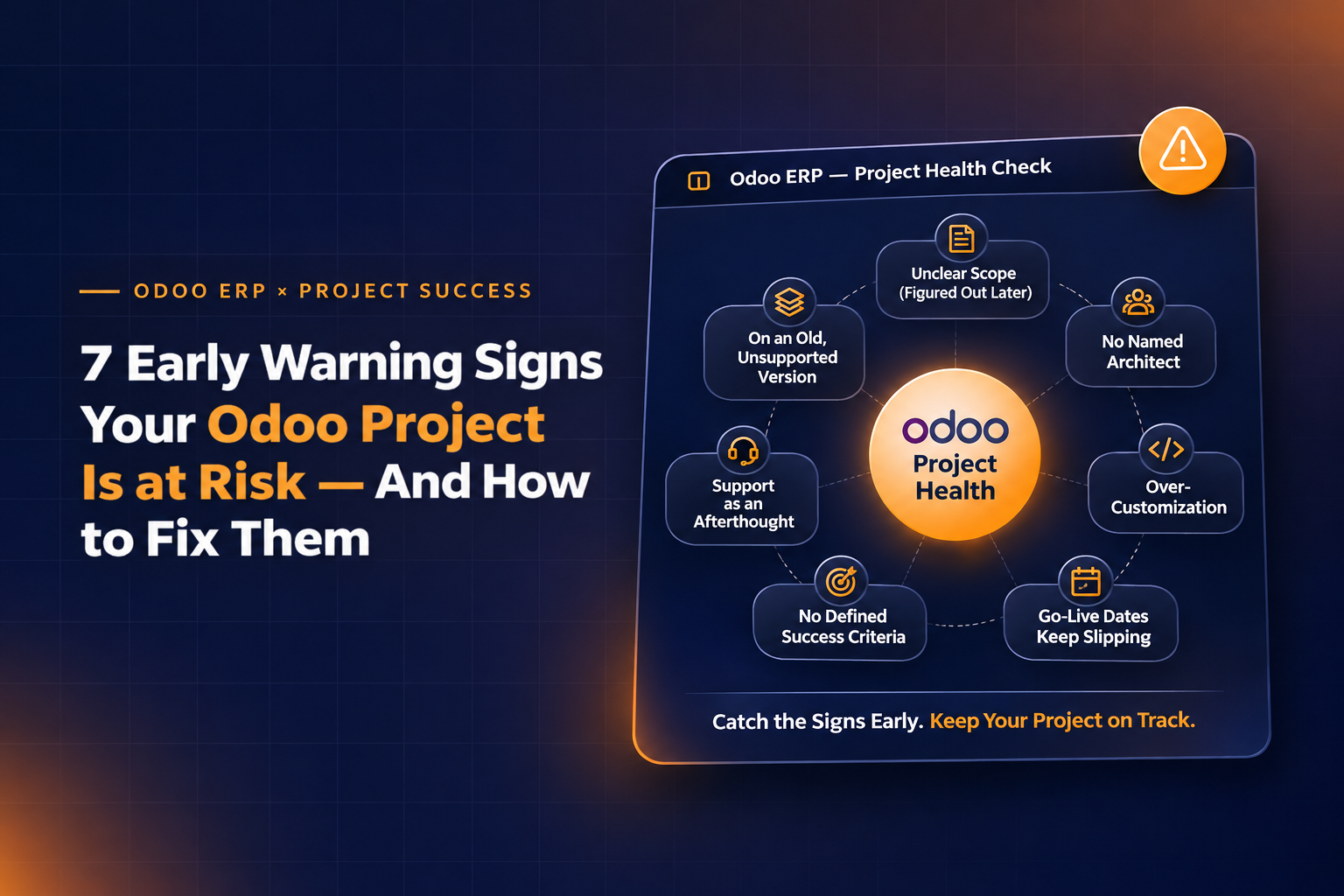
The same seven warning signs show up again and again, usually weeks or months before anyone admits the project is in trouble. If you catch them early, they're fixable. If you don't, they compound.
1. Scope Was “Figured Out During Implementation”
This is the most common failure cause, and it sounds reasonable in a sales call. “Odoo is flexible, we'll lock down the details as we go” — then a four-month, fixed-price project gets signed off three bullet points per module. Three weeks in, the first “small” question arrives (Does inventory use FIFO, AVCO, or standard cost?), and nobody has an answer because nobody asked it before the contract was signed.
The fix: Insist on a real discovery phase before configuration starts — one that produces a documented requirements baseline per department, not a feature checklist. If a partner wants to skip straight to building, that's the first red flag, not a sign of speed.
2. No Named Architect on Your Project
You were sold by someone senior. You're now talking to a rotating cast of consultants who weren't on the original call. If a partner can't give you the name, background, and delivered-project history of the specific person architecting your build, you're buying a logo, not a team.
The fix: Ask for a Single Point of Contact (SPOC) who owns the project end-to-end, from discovery through go-live and into support — not a different face for every phase.
3. Over-Customization Without Justification
Odoo's flexibility is a double-edged sword. Every custom module solves today's problem and adds tomorrow's maintenance burden. When customization isn't tied back to a documented business reason, it's usually filling a gap that standard Odoo already covers — just not the way your team is used to working.
The fix: A good partner pushes back and asks “why” before building something custom. A partner that says yes to everything is optimizing for billable hours, not for your long-term cost of ownership.
4. Go-Live Dates Keep Slipping Without a Revised Plan
One delay is normal. Chronic slippage with no updated timeline, no explanation, and no accountability is a governance failure, not a scheduling one.
The fix: Every delay should come with a revised plan and a reason, not silence. If you can't get a straight answer about why the date moved, that's the real problem — not the date itself.
5. Nobody Can Name a Success Criteria
If the project has no agreed definition of “done” — a go-live checklist both sides signed off on — it can never clearly succeed or fail. It just drifts.
The fix: Define go-live criteria during discovery: which workflows must work, which reports must be live, which data must be migrated and verified. Put it in writing before build starts.
6. Support Is Treated as an Afterthought
Many teams consider the project “done” at go-live. In reality, a high-performing ERP isn't the most feature-complete one — it's the one people actually keep using three months later, with issues fixed fast enough that nobody reverts to spreadsheets.
The fix: Confirm what post-go-live support actually looks like before you sign: response times, who you call, and whether it's billed hourly or bundled.
7. You're on an Old, Unsupported Odoo Version
- ✓Odoo supports only its three most recent major versions. A deployment stuck two versions back on heavily customized code has a hard deadline whether or not anyone has written it down — security patches and bug fixes simply stop.
- ✓The fix: Know your version's support window now, not when something breaks. Migration planned early is a project; migration forced by an outage is a crisis.
- ✓None of these seven signs are fatal on their own. What makes a project actually fail is usually two or three of them stacking up unnoticed. If you're reading this and recognizing more than one, the project isn't broken yet — but it's worth an honest audit before the next milestone slips.
Ready to Try It?
Not sure if your project is drifting? Book a Free Demo at hirebeans.cloud and we'll walk through it with you.
Book a Free Demo