
Introduction
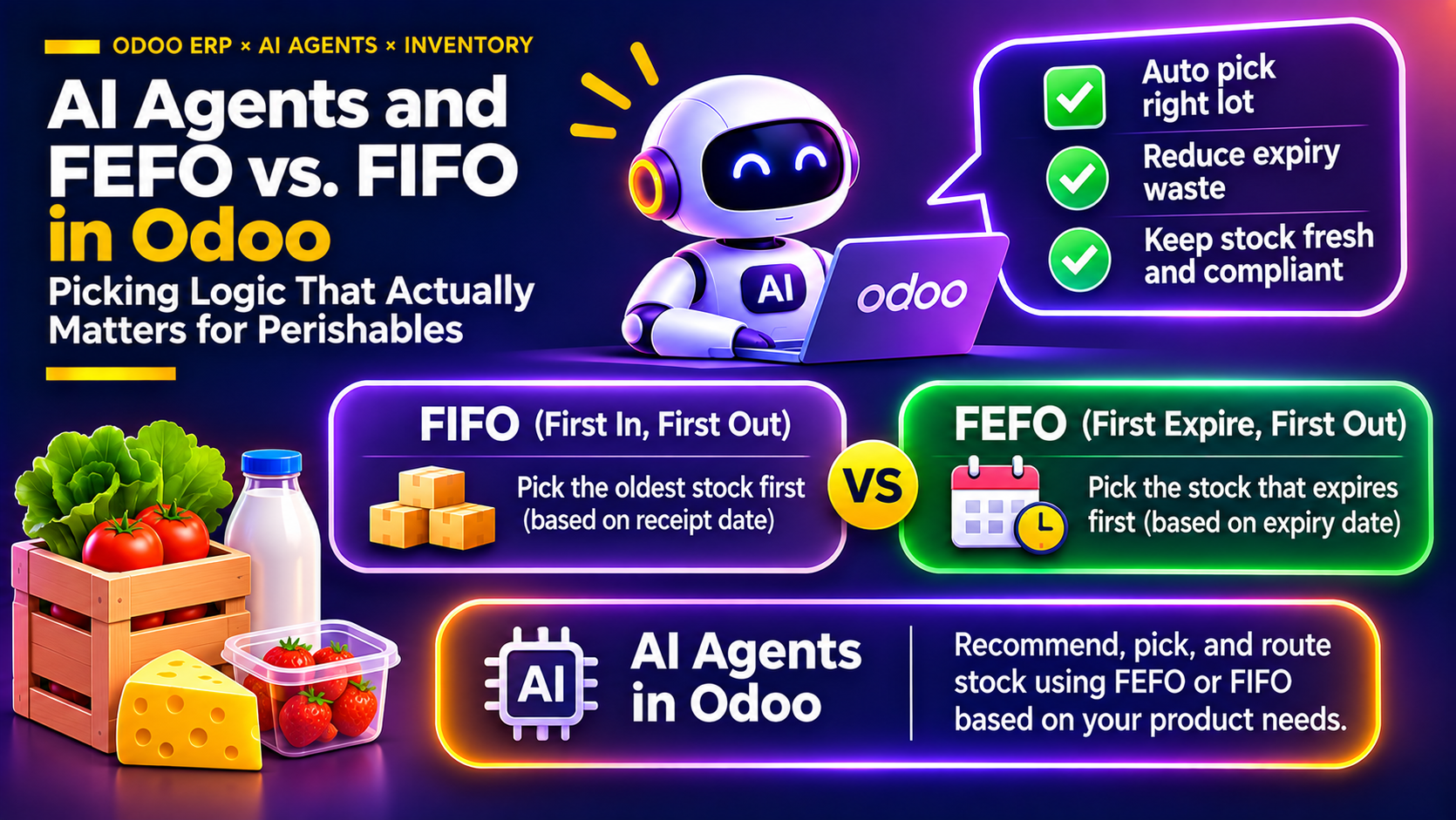
First-In-First-Out (FIFO) is the default picking logic most people assume for perishable goods — pick what arrived first. For food and beverage specifically, that's often the wrong default. First-Expired-First-Out (FEFO) — pick what expires soonest, regardless of arrival order — is usually the logic that actually prevents waste, because a later-arriving batch can have an earlier expiry date than an older one, depending on production dates and shelf life variation between batches.
Why This Distinction Is Easy to Get Wrong
Odoo supports configurable removal strategies, including FEFO, at the warehouse or product category level — the capability exists. The practical risk is in the gap between configuration and reality: a removal strategy set correctly for one product category might not be applied consistently as new products are added, or a warehouse team working manually (rather than through strict barcode-guided picking) might default to grabbing what's physically easiest to reach rather than what the system's removal strategy actually specifies.
Where an AI Agent Fits In
An AI agent reading Inventory data can monitor whether actual picking behavior is matching the configured removal strategy — flagging when a pick doesn't follow FEFO despite the product category being configured for it, which is a useful signal that either the configuration has a gap or the picking process on the floor isn't being followed. It can also proactively flag lots approaching expiry that haven't been prioritized for picking yet, the same expiry-monitoring capability covered in this blog's healthcare inventory post, applied here to perishable food and beverage stock specifically.
What This Looks Like, Illustrated
Illustrative example for explanatory purposes. Real flags depend on your own lot, expiry, and picking data.
Where a Person Still Decides
The agent flags the gap between configured strategy and actual picking behavior, or an expiry risk — a warehouse manager still investigates why the deviation happened (training gap, system issue, or a deliberate judgment call for a specific reason) and decides what to do about an at-risk lot. The value is catching the pattern before it becomes a larger waste or compliance issue.
Ready to Try It?
Want to see if your own picking logic matches your configured removal strategy? Book a Free Demo at hirebeans.cloud.
Book a Free Demo