
Introduction
Research cited by procore.com, attributed to McKinsey, has put large construction projects at running roughly 20% behind schedule on average, with budgets exceeding original estimates by as much as 80% in some cases. Those aren't universal numbers — they vary by project type, region, and report — but the underlying pattern they point to is a familiar one in the industry: cost and schedule overruns are common, and they often become visible only after a meaningful amount of budget has already been committed.
Why the Warning Signs Are Often Missed Early
A construction project's budget is spread across many cost categories — labor, materials, subcontractor costs, equipment, permits — each tracked against its own budget line. A single category running over isn't necessarily alarming in isolation. The real risk is a project where several categories are each running moderately over at the same time, a pattern that's easy to miss when each line is reviewed individually rather than as a combined trend against the overall project budget and timeline.
Where an AI Agent Fits In
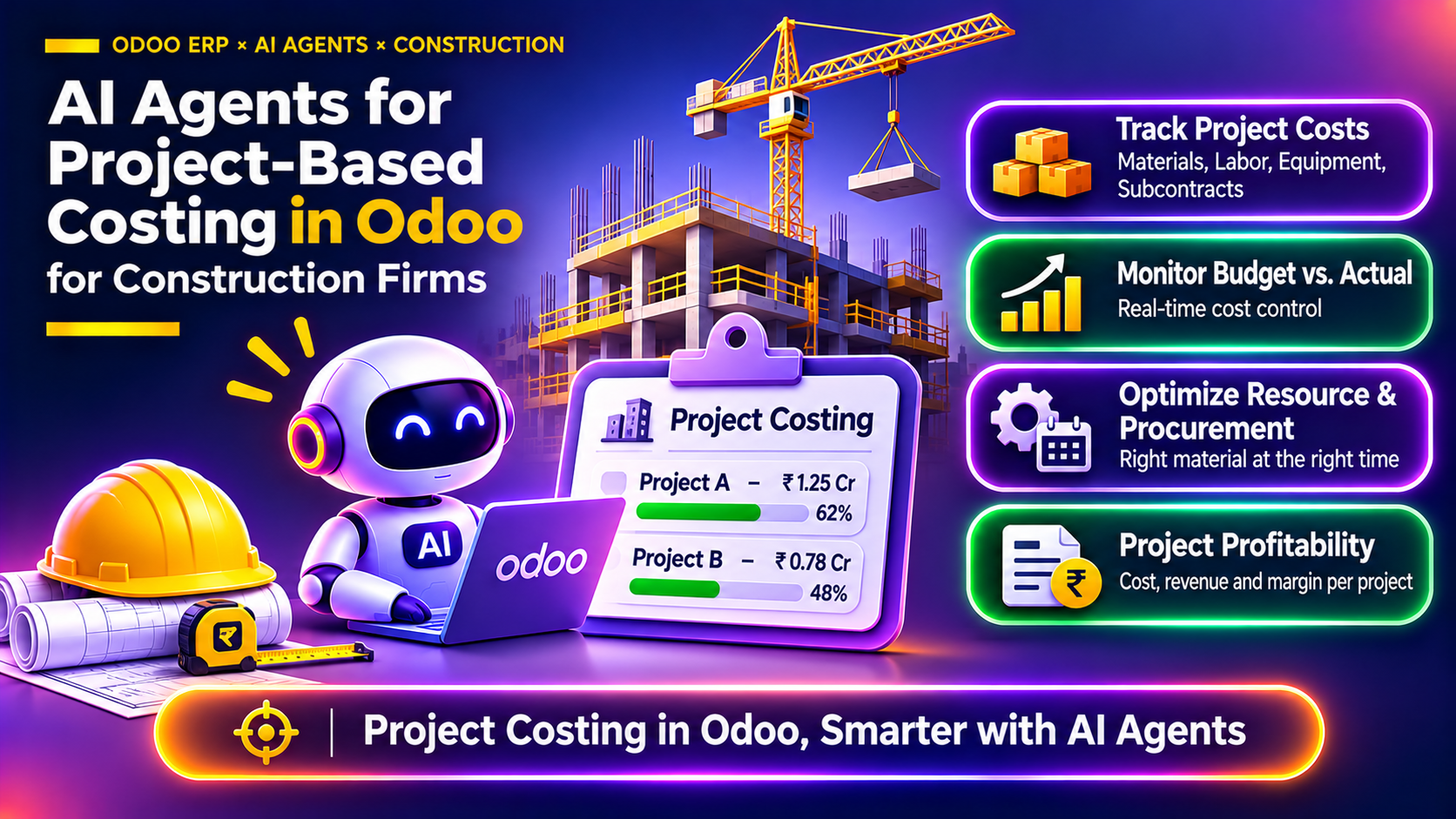
An AI agent reading Project and Accounting data can monitor actual costs against budgeted costs across all categories continuously, flagging a project where the combined trend — not any single line — suggests a budget or schedule risk worth a closer look, well before the quarter-end review where it might otherwise first get visibility. This is the same underlying—cumulative small signals adding up to a significant pattern—logic covered in this blog's manufacturing post on multi-level BOM costing, applied here to construction project budgets specifically.
What This Looks Like, Illustrated
Illustrative example for explanatory purposes. Real figures depend on your own project cost data.
Where a Person Still Decides
The agent surfaces the combined trend early — a project manager still investigates the specific cause (a scope change, a pricing shift, inefficiency) and decides what corrective action to take, whether that's a client conversation, a schedule adjustment, or a cost-control measure. The value is having that conversation at 30% through the project, not at completion.
Ready to Try It?
Want to see what your own project cost trends look like combined, not just line by line? Book a Free Demo at hirebeans.cloud.
Book a Free Demo