
Introduction
A recruitment agency running several open roles at once, each with candidates sitting at different pipeline stages — sourced, screened, interviewed, offered — faces a visibility problem that's easy to underestimate: a candidate who stalls at a stage for too long, or a role with a thinning pipeline that isn't refilled in time, can quietly cost a placement before anyone notices the pattern across the full portfolio of active roles.
Why Pipeline Stalls Are Easy to Miss
A recruiter actively working a handful of roles can usually sense when something feels stuck. That intuition gets less reliable as the number of concurrently active roles grows, or across a team of recruiters where no single person has full visibility into every pipeline at once — a candidate who's been sitting in “awaiting client feedback” for three weeks on one role might be completely invisible if attention is naturally drawn to the roles that feel more urgent.
Where an AI Agent Fits In
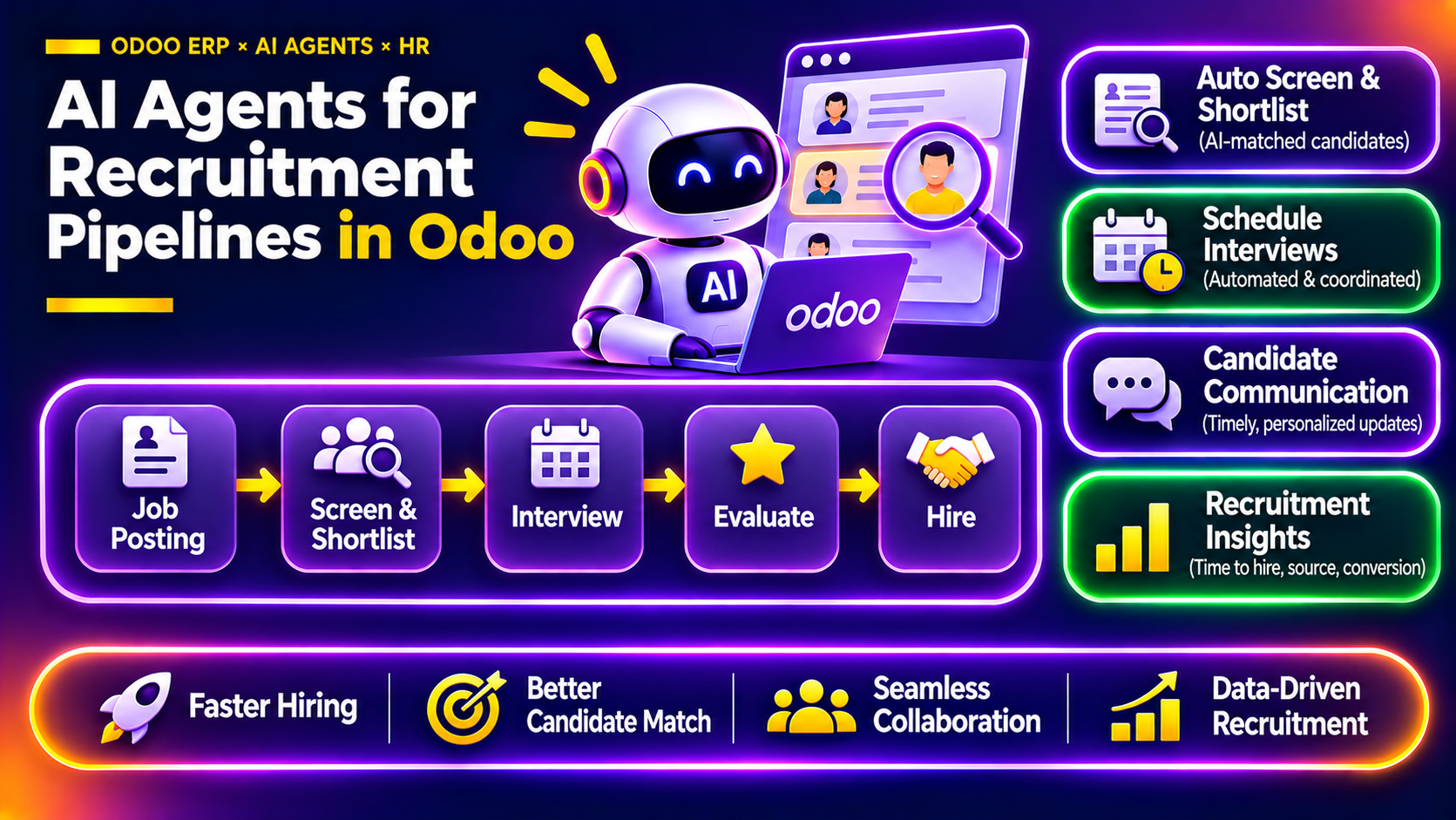
An AI agent reading Recruitment pipeline data (hr.applicant and related stage/activity records) can monitor how long each candidate has been sitting at their current stage, flag candidates stalled well past the typical time for that stage, and flag roles where the overall pipeline — the number of active candidates at each stage — is thinning in a way that suggests a sourcing gap before the role risks going unfilled.
What This Looks Like, Illustrated
Illustrative example for explanatory purposes. Real flags depend on your own pipeline and stage-timing data.
Where a Person Still Decides
The agent flags the stall or the thinning pipeline — a recruiter or account manager still makes the follow-up call to the client, decides whether to continue sourcing, or determines if a candidate should be moved forward or let go from the process. The value is catching the stall at three weeks, not discovering it only when the client asks for a status update.
Ready to Try It?
Want to see which of your active pipelines might be quietly stalling right now? Book a Free Demo at hirebeans.cloud.
Book a Free Demo