
Introduction
Progress billing — invoicing a client based on the percentage of a project completed to date, rather than a flat milestone or lump sum — depends entirely on the accuracy of the completion percentage itself. If that estimate is off, either systematically optimistic or pessimistic, the billing is off too, and the gap compounds with every progress invoice until a final reconciliation surfaces it, often at the least convenient point in the project.
Why Completion Estimates Drift From Reality
A completion percentage is often estimated by a project manager's judgment, informed by a schedule and visible progress, but not always cross-checked rigorously against actual cost incurred to date — which is frequently a more reliable proxy for true completion than a visual or schedule-based estimate. A project that looks 60% complete on the schedule might have incurred 75% of its budgeted cost, which is a meaningful signal that either the remaining work will cost more than budgeted, or the completion estimate itself is behind.
Where an AI Agent Fits In
An AI agent reading Project and Accounting data can compare a project's stated completion percentage (used for progress billing) against its actual cost-incurred percentage, flagging a meaningful divergence between the two as worth a review before the next progress invoice goes out — catching a billing-accuracy issue while it's still a small gap rather than a large one discovered at project close.
What This Looks Like, Illustrated
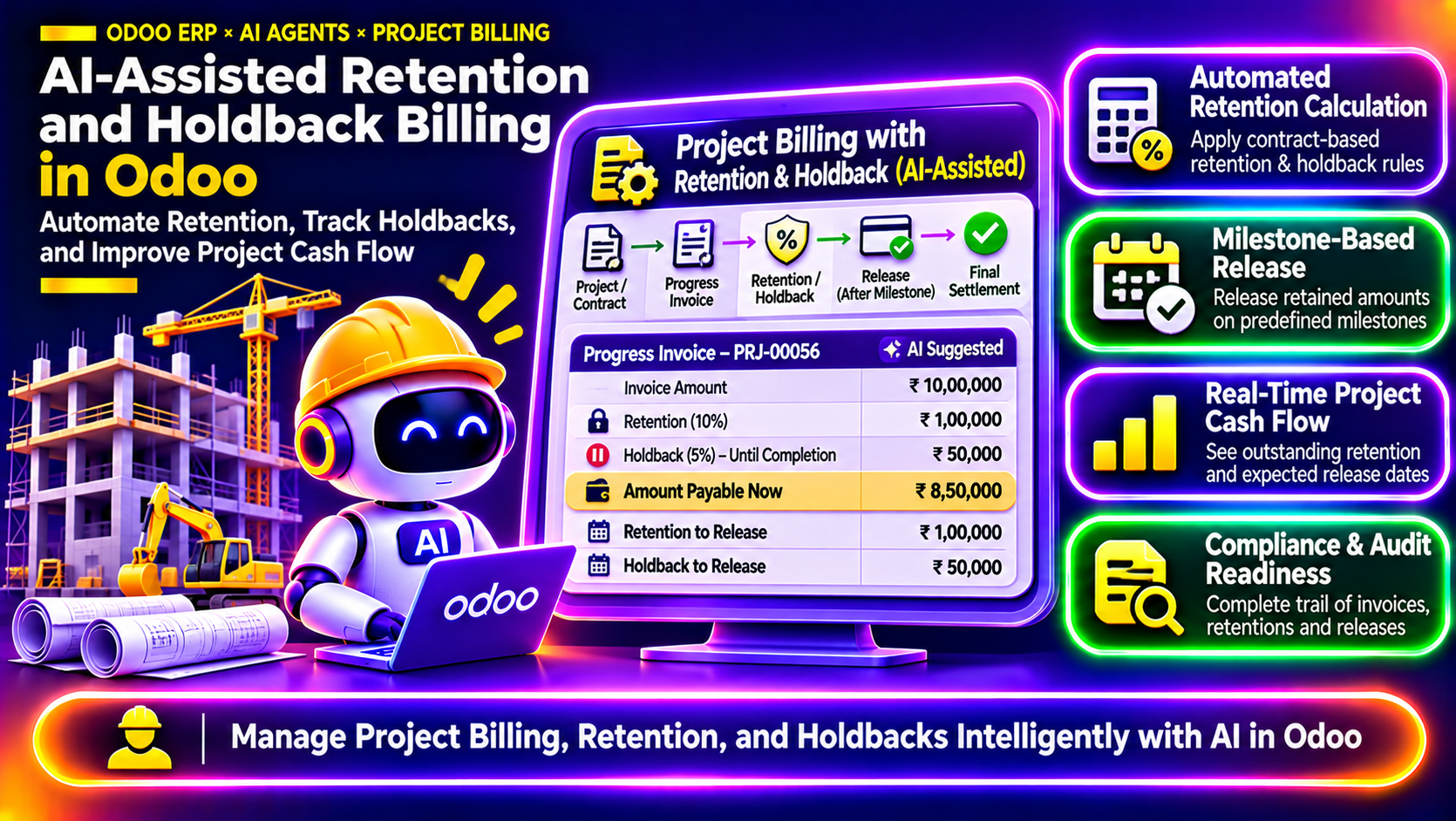
Illustrative example for explanatory purposes. Real figures depend on your own project cost and billing data.
Where a Person Still Decides
The agent flags the divergence between stated and cost-based completion — a project manager still determines the actual cause (a budget issue, a completion estimate that needs updating, or a legitimate timing difference) and decides whether the progress billing needs adjusting before it goes out. The value is catching the gap at the next invoice, not at project closeout.
Ready to Try It?
Want to see if your progress billing estimates are tracking with actual project cost? Book a Free Demo at hirebeans.cloud.
Book a Free Demo