
Introduction
Panorama Consulting's 2026 ERP project data, covering 170 ERP projects, found that more than a quarter ran over budget and almost a quarter ran over schedule. The median project duration was nine months. The most notable finding, though, isn't the overrun percentages themselves — it's the stated leading cause: organizational issues, not technology problems, were identified as the primary driver of schedule overruns.
The Outcomes, by the Numbers
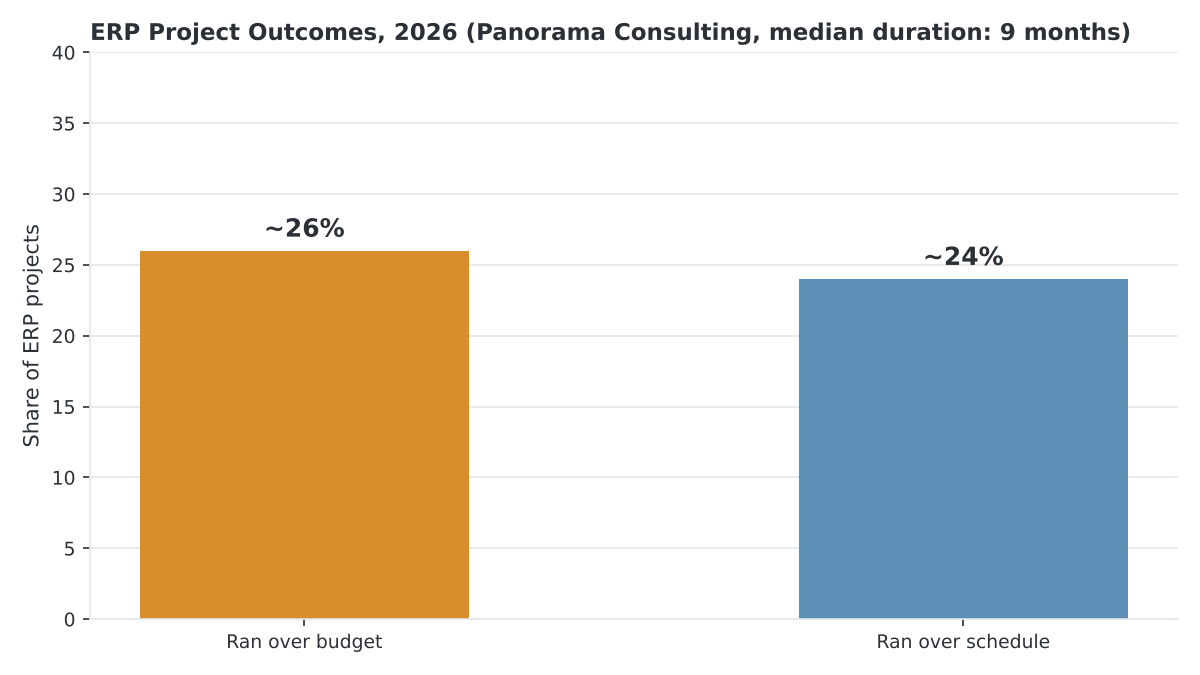
Source: Panorama Consulting, 2026 ERP project data (n=170 projects), as compiled by KORE1's State of Mid-Market ERP AI Adoption report.
A roughly one-in-four overrun rate on both budget and schedule is high enough to plan around deliberately, but not so high that it suggests ERP implementation is inherently unreliable — a majority of projects in this data stayed on budget and on schedule. The more useful read is in the stated cause: when organizational issues, not technical ones, are the leading driver of overruns, that points toward a different kind of risk mitigation than most companies default to.
Why “Organizational Issues” Is the More Useful (and More Fixable) Finding
Technology risk gets most of the attention in ERP planning conversations — will the software do what we need, will the integration work, is the data migration going to be clean. Those are real risks, but Panorama's data suggests they're not the leading cause of overruns. “Organizational issues” typically covers things like unclear decision-making authority, inconsistent stakeholder alignment, scope changes driven by internal disagreement rather than new information, and inadequate change management for the people who'll actually use the new system day to day — all of which are addressable through project structure and methodology, not better software.
Where HireBeans Fits In
This is the direct case for a methodology-first approach to implementation, which is why our engagements run through a defined sequence — Discovery, L-1 Demo, Kickoff, UAT, Go-Live, Support — with a single point of contact (SPOC) owning the project throughout. That structure exists specifically to address the organizational-issue category this data identifies as the leading risk: clear decision-making ownership, defined stakeholder sign-off at each stage, and a single accountable contact rather than fragmented communication across a project team.
Want to see how a SPOC-led, staged implementation is structured to avoid the organizational pitfalls this data points to? Book a Free Demo at hirebeans.cloud.
Book a Free Demo