
Introduction
Cross-docking — moving inbound goods directly to an outbound shipment without putting them into storage first — is a genuine efficiency win when it works, cutting handling time and storage cost. It only works, though, when the inbound arrival and the outbound departure actually line up in time. When they don't, the goods end up sitting in a staging area anyway, which is close to the inefficiency cross-docking was meant to avoid in the first place.
Why the Timing Coordination Is the Hard Part
Odoo 19 simplified cross-docking setup specifically for marketplace and drop-ship fulfillment, which handles the configuration side well. The operational challenge that configuration alone doesn't solve is timing coordination: an inbound shipment arriving a few hours later than the outbound truck's departure window turns a cross-dock into a short-term storage situation, and someone needs to catch that mismatch early enough to either expedite, hold the outbound shipment, or reroute through standard storage instead.
Where an AI Agent Fits In
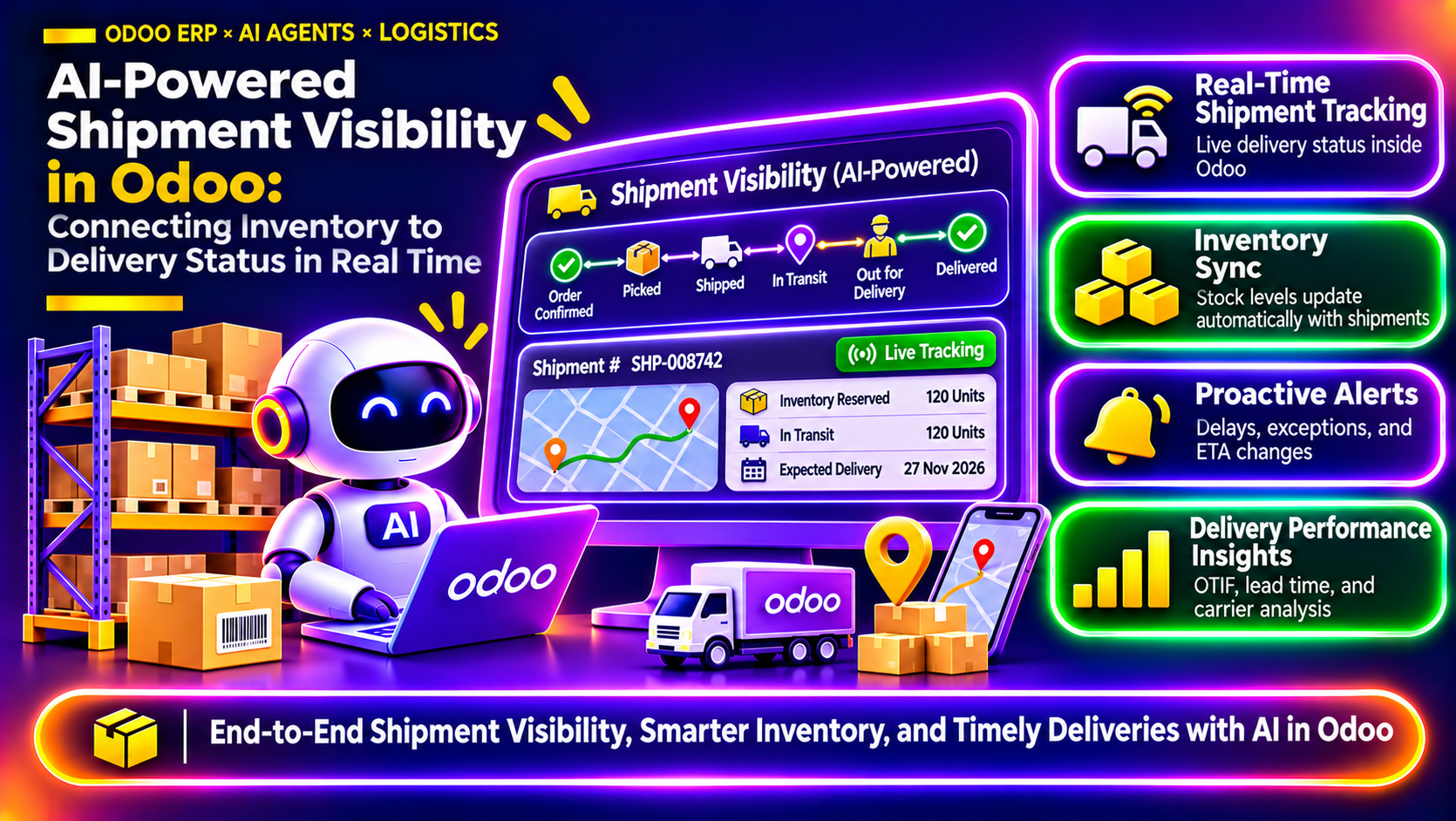
An AI agent reading inbound and outbound shipment schedules together can flag a timing mismatch before it happens — “this inbound shipment is trending toward arriving after its scheduled cross-dock outbound window” — based on current carrier tracking data for the inbound leg, giving a warehouse coordinator time to adjust rather than discovering the mismatch when the outbound truck is already waiting at the dock.
What This Looks Like, Illustrated
Illustrative example for explanatory purposes. Real flags depend on your own inbound and outbound scheduling data.
Where a Person Still Decides
The agent flags the timing risk — a warehouse coordinator still decides how to handle it: expedite, hold the outbound shipment, or fall back to standard storage for that load. The value is having that decision point flagged with enough lead time to act calmly, rather than discovering the mismatch at the dock.
Ready to Try It?
Curious how cross-docking could work more reliably in your own operation? Book a Free Demo at hirebeans.cloud.
Book a Free Demo