
Introduction
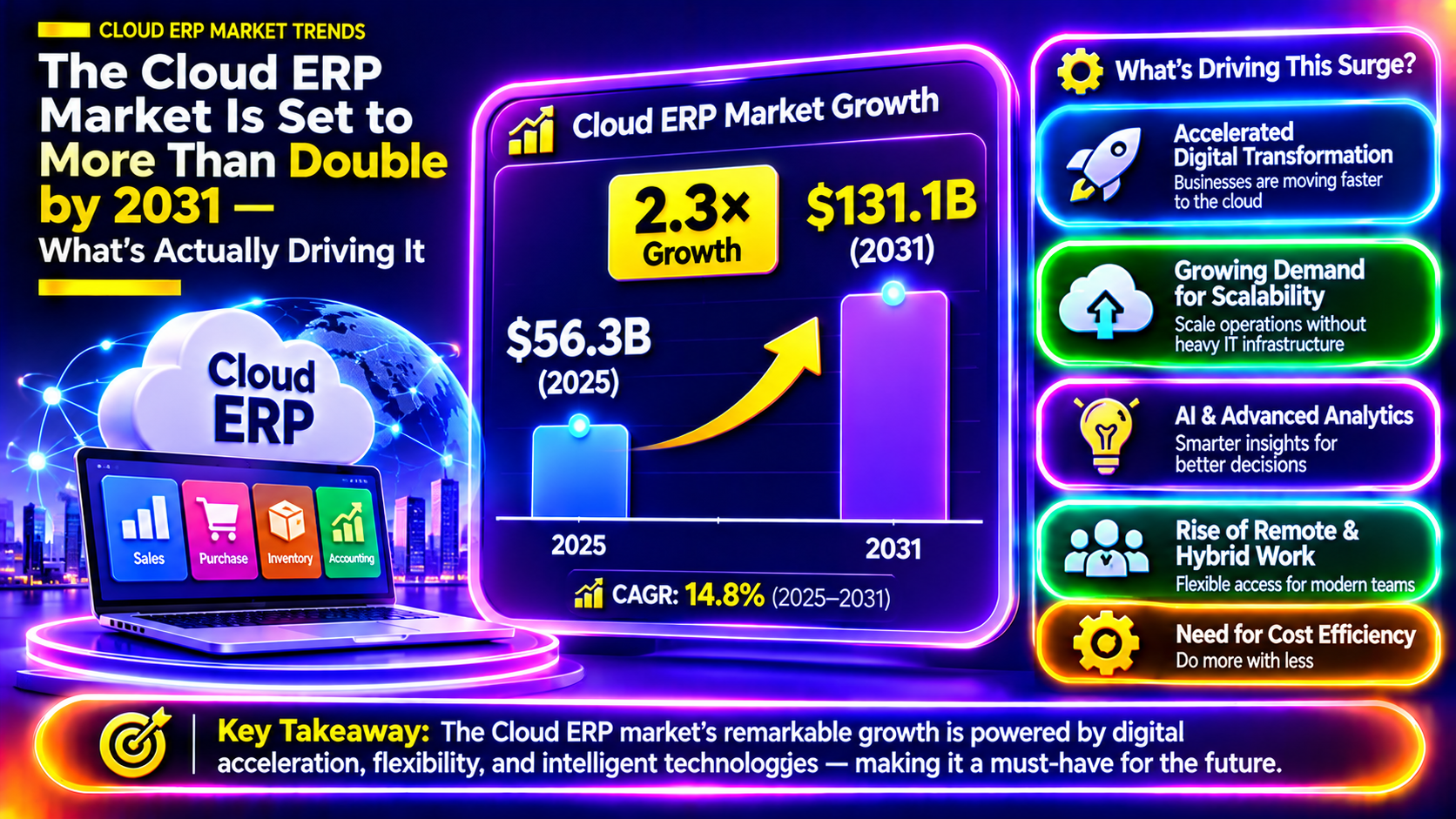
Mordor Intelligence projects the global cloud ERP market will grow from $56.53 billion in 2026 to $138.56 billion by 2031 — roughly a 2.45x increase in five years. Separately, private cloud ERP specifically is growing at around 22% a year, a notably faster clip than the broader cloud ERP market average, driven largely by regulatory requirements in banking and healthcare. Analysts describe the broader pattern as an ERP “supercycle,” with forecasts for annual market growth ranging from 9.5% (Grandview Research) to as high as 17% (Morgan Stanley).
The Growth Curve
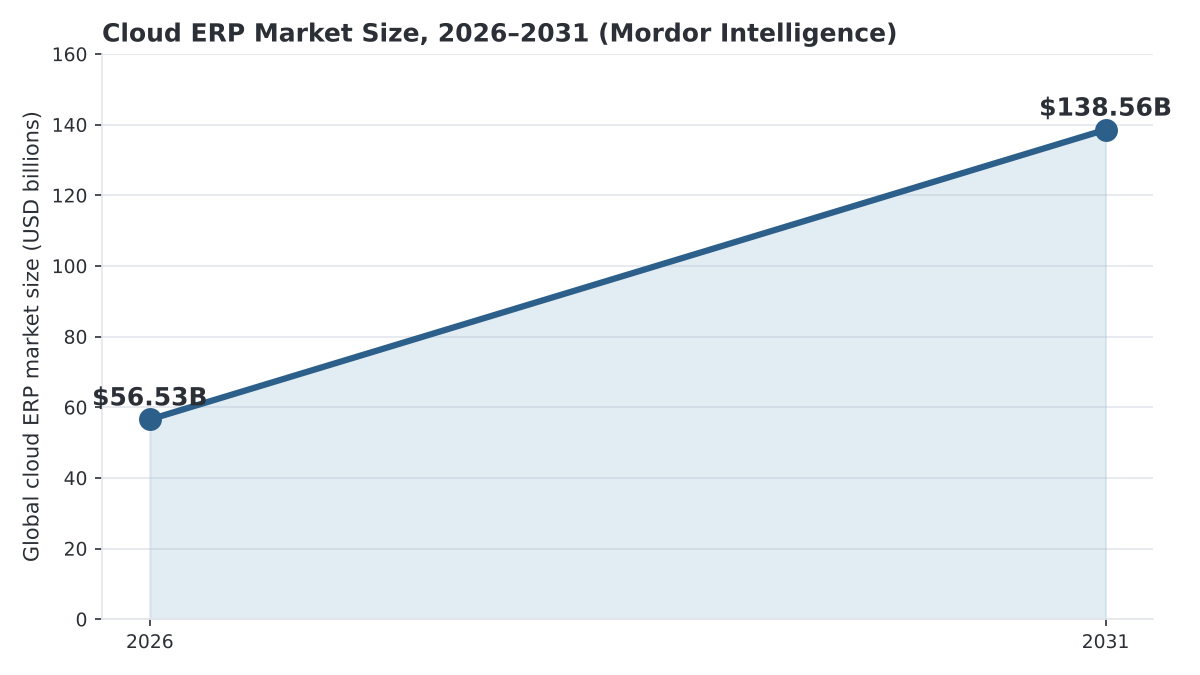
Source: Mordor Intelligence global cloud ERP market size forecast, as cited in CIO.com's 2026 ERP trends reporting.
A range this wide between forecasters (9.5% to 17% annual growth) is itself informative — it suggests genuine uncertainty about the pace, not disagreement about the direction. Every cited source agrees the market is growing; they differ on how fast, which is a reasonable disagreement given how much depends on how quickly large, regulated enterprises specifically move, since they represent a disproportionate share of total ERP spend relative to their numbers.
What's Actually Driving the Growth, Beyond "AI Is Trendy"
Three distinct forces are compounding here, not just one. First, genuine AI capability growth is pulling new cloud ERP spending, as covered in this blog's post on Gartner's AI spending forecast. Second, end-of-life deadlines on legacy on-premises systems (SAP Business Suite 7, Dynamics GP) are forcing migration decisions on a fixed timeline, covered in this blog's dedicated post on that topic. Third, and distinctly, private cloud specifically is growing faster than the cloud ERP market overall, driven by regulatory requirements rather than feature demand — a different, parallel driver from the AI-adoption story.
Where HireBeans Fits In
Whichever of these three forces is actually pulling your own business toward a cloud ERP decision — wanting the AI capability, facing an end-of-life deadline, or needing to meet a regulatory requirement — the practical next step is usually the same conversation: what does a move to (or within) Odoo's cloud environment look like for your specific data, processes, and compliance needs. We work through that conversation as a scoped evaluation, not a sales pitch, before any implementation work begins.
Want to understand which of these forces actually applies to your business, and what it means practically? Book a Free Demo at hirebeans.cloud.
Book a Free Demo