
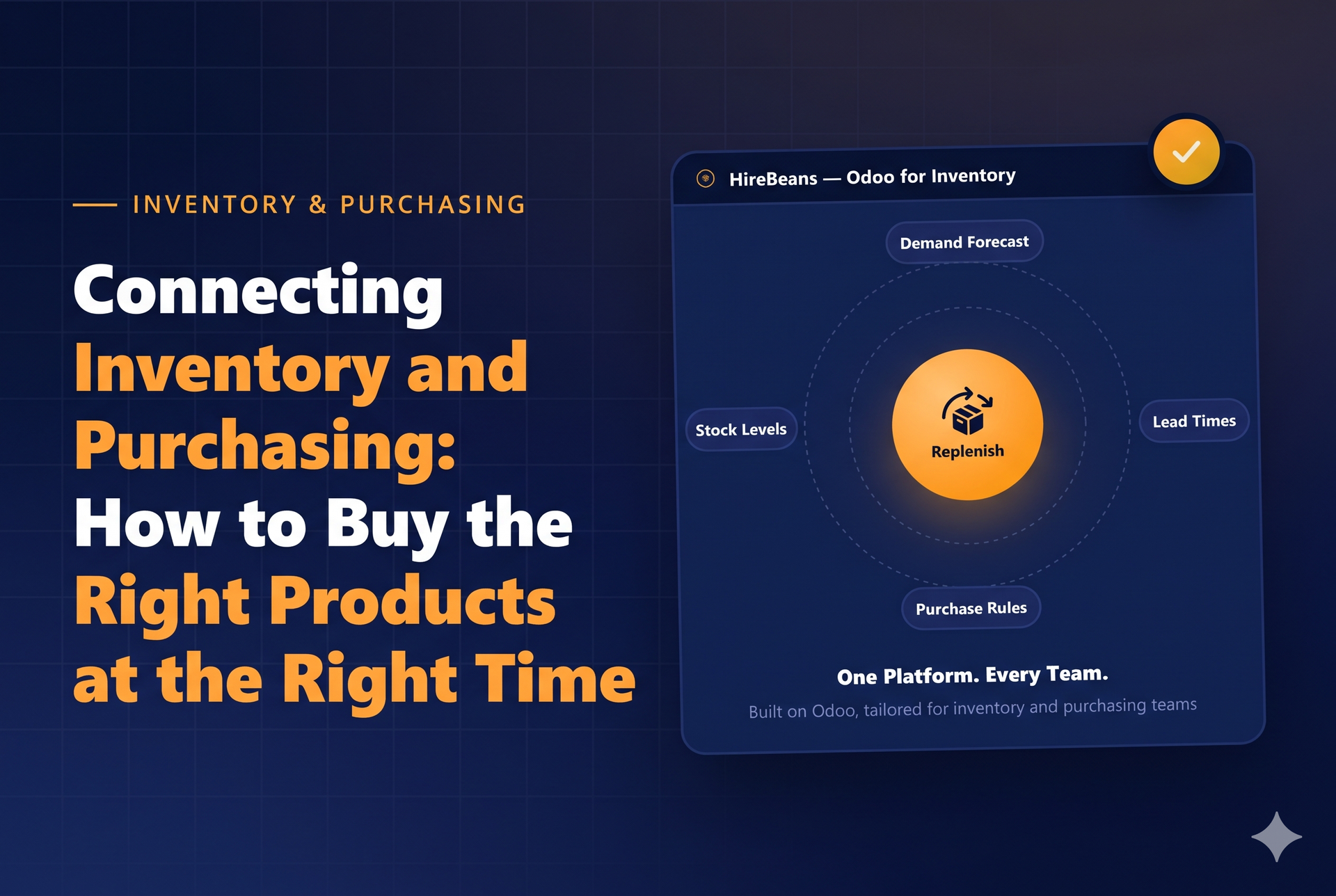
Bridging the Gap Between Buying and Storing
Purchasing decisions should never be made in a vacuum. To maximize efficiency and protect cash flow, every buy must be directly connected to actual, verified inventory needs. When purchasing operates independently from the warehouse, relying entirely on manual checks, gut feelings, or disconnected spreadsheets, it becomes impossible to buy the right products at exactly the right time.
The Blind Spots of Disconnected Teams
When procurement teams cannot easily see real-time available stock, upcoming forecasted demand, or existing supplier lead times, they are forced into reactive purchasing. This results in the dreaded 'bullwhip effect'—panic buying massive quantities when a stockout occurs, only to be left with crippled working capital and warehouses overflowing with obsolete items months later. A lack of inventory and purchase integration is one of the most common causes of supply chain inefficiency.
Key Features: Creating a Unified Workflow
A Practical Business Example
A bustling electronics retailer constantly struggles to keep high-demand charging cables in stock, while expensive, slow-moving smart home hubs gather dust. By implementing tight inventory optimization tools, they connect their warehouse data to their procurement dashboard. The system is configured to automatically draft RFQs for charging cables the moment stock dips below 500 units. Meanwhile, smart hubs are switched to a Make-to-Order route, meaning purchasing only buys a hub from the vendor exactly when a customer pays for it, completely optimizing their working capital.
Conclusion
Seamless coordination between inventory and purchasing is the key to unlocking true supply chain agility. However, businesses must remember that excellent procurement planning depends entirely on maintaining accurate physical stock records and continually refining replenishment settings.
Synchronize your purchasing and inventory today. Book a Free Demo at hirebeans.cloud
Book a Free Demo