
Introduction
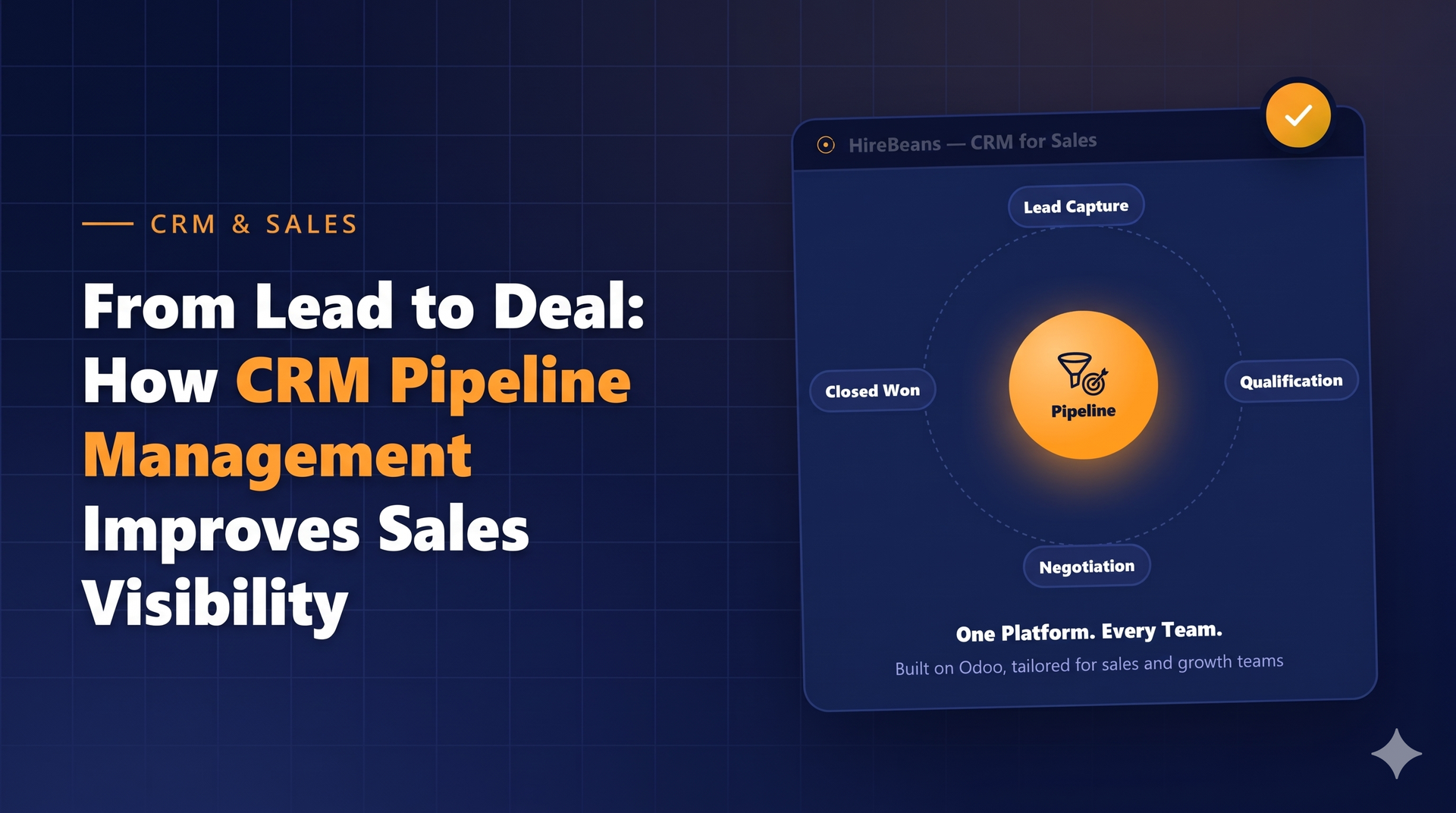
A sales pipeline is the visual heartbeat of a company's revenue generation process. It represents the journey a prospect takes from their very first interaction through qualification, proposal, negotiation, and ultimate deal closure. However, without a structured process to manage these stages, businesses frequently face challenges such as missed opportunities, unclear deal statuses, inconsistent follow-ups, and an inability to accurately forecast future sales.
Effective CRM pipeline management solves these problems by providing a centralized view of all active sales opportunities. By standardizing the sales workflow, businesses ensure that every prospect is handled consistently, allowing sales representatives and managers to see exactly where deals stand and what actions are required next.
Enhancing Sales Workflows (Feature Grid)
Gaining Clarity with Odoo CRM
Odoo CRM brings sales processes to life through an intuitive, Kanban-style visual pipeline. Sales teams can easily drag and drop opportunities from one customizable stage to the next. Because the platform natively supports opportunity management and sales process automation, managers gain real-time visibility into expected revenue, upcoming scheduled activities, and potential delays. This clarity replaces guesswork with actionable insights, helping teams prioritize their daily tasks.
A Practical Business Example
Imagine a software consulting firm managing dozens of prospective clients simultaneously. In the past, managers had to ask representatives for individual status updates, often discovering that proposals had sat untouched for weeks. By adopting structured pipeline management, the firm now sees a clear dashboard where deals are categorized by stage. If multiple high-value deals bottleneck in the 'Negotiation' column, the sales manager instantly spots the trend and can step in to provide support, ensuring smoother deal closures and more accurate sales forecasting.
Take Control of Your Pipeline
Want to visualize your sales pipeline and track deals more efficiently? Book a Free Demo at hirebeans.cloud
Book a Free Demo