
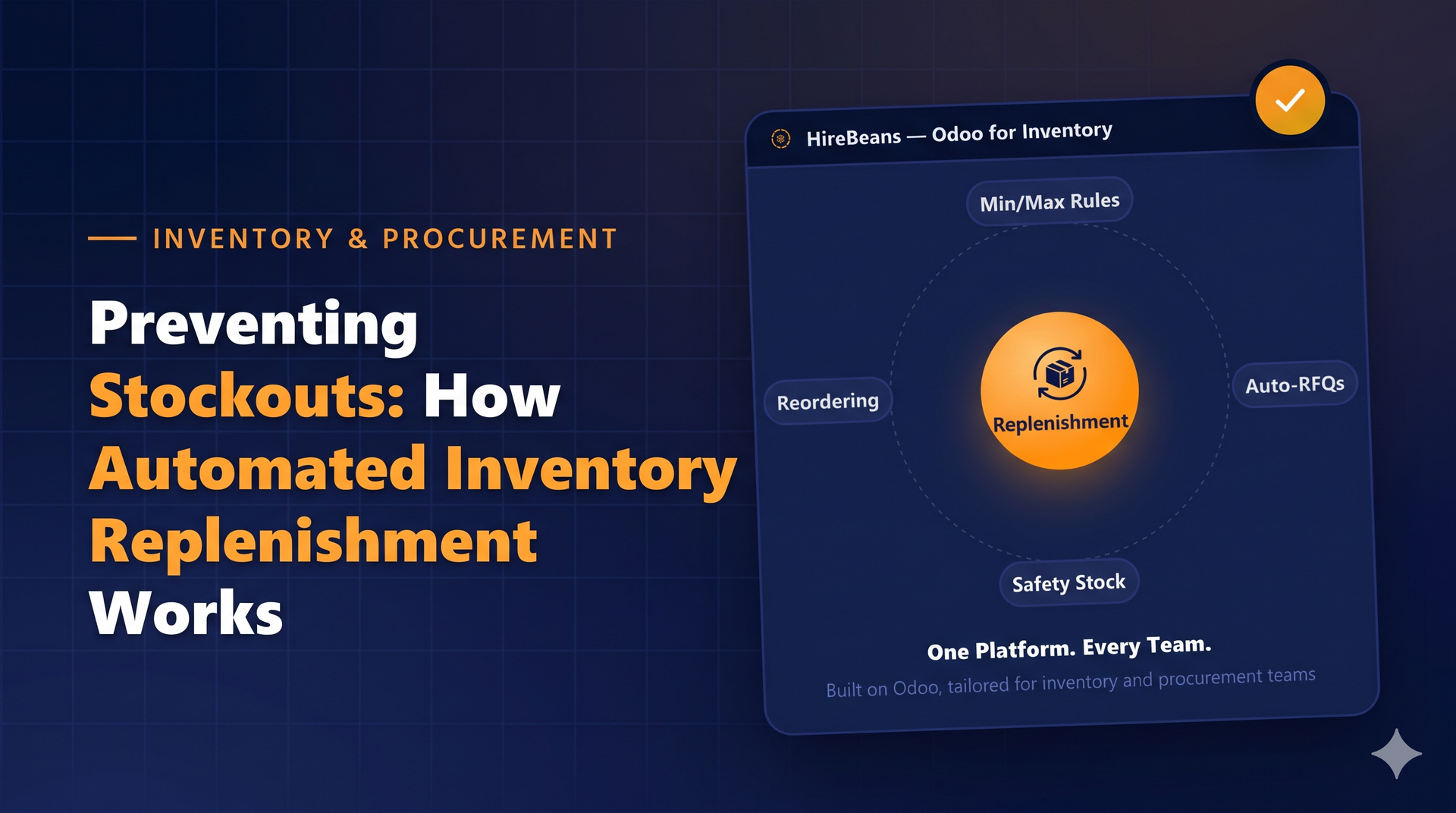
The Balancing Act of Inventory Planning
Maintaining the perfect balance of stock is one of the toughest challenges in supply chain management. Businesses must ensure they have enough product to satisfy customer demand without tying up excessive capital in warehouse shelves. Automated inventory replenishment is a strategic process that maintains sufficient stock levels based on historical demand, projected sales, and supplier lead times.
The Cost of Manual Reordering
Relying on employees to monitor every product manually is highly error-prone and unscalable. Purchasing too late results in damaging stockouts, backorders, and lost revenue. Conversely, reacting to stockouts with panic-buying often leads to overstocking slow-moving products. Without inventory reordering rules, purchasing managers spend hours crunching numbers rather than negotiating better supplier contracts.
Key Features: Automating Replenishment in Odoo
A Practical Business Example
A regional hardware distributor manages a mix of fast-moving items like screws and slow-moving items like specialty power tools. By implementing automated inventory replenishment, they set aggressive reordering rules for the screws, ensuring a new purchase order is drafted the moment stock drops below 10,000 units. For the power tools, the system is configured with lower thresholds to prevent excess stock. This targeted approach prevents stockouts on critical items while completely protecting the company's cash flow from dead stock.
Conclusion
Automation is a powerful tool for inventory planning, but it must be applied thoughtfully. Automated replenishment depends entirely on accurate configuration; reviewing supplier lead times, demand patterns, and minimum quantities regularly is essential to ensure rules do not create unintended stock imbalances.
Want to put your replenishment on autopilot? Book a Free Demo at hirebeans.cloud
Book a Free Demo