
Introduction
- ✓A recruitment agency doesn't operate around a single task.
- ✓A client provides a requirement. Recruiters search for candidates. Profiles are submitted. Interviews are scheduled. Feedback is collected. A candidate is selected. Then the placement becomes part of the agency's commercial operation.
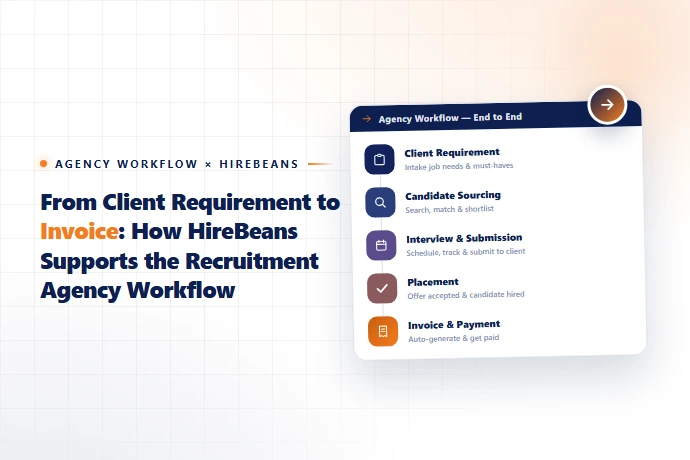
- ✓The complete journey can look like this:
- ✓Client → Requirement → Candidate → Submission → Interview → Placement → Invoice → Reporting
- ✓The challenge is keeping each stage organized and connected. That's where purpose-built recruitment software can help.
1. Start With the Client Requirement
- ✓Every recruitment opportunity begins with understanding what the client needs. A requirement may include:
- ✓Position
- ✓Required skills
- ✓Experience
- ✓Location
- ✓Number of openings
- ✓Hiring timeline
- ✓Client details
- ✓Instead of keeping these details buried in emails, spreadsheets, or separate notes, recruitment software can give recruiters a structured starting point. The goal is simple: make the requirement clear enough for recruiters to begin sourcing the right candidates. See how agencies keep client requirements organized and connected to the wider recruitment workflow.
2. Move From Requirement to Candidate
- ✓Once the requirement is clear, recruiters need to identify suitable candidates. The workflow can move from:
- ✓Requirement → Candidate Search → Shortlist → Submission
- ✓HireBeans can support the move from client requirements to candidate search and recruitment activity, helping recruiters work from a structured recruitment agency candidate database rather than disconnected spreadsheets.
- ✓The important point is that recruiters are working from the requirement toward relevant candidates within the same recruitment workflow — and that submissions stay trackable once they're sent to the client.
3. Keep Interviews and Recruitment Activities Organized
Once a client wants to speak with a candidate, the recruitment process moves to another important stage: the interview.
Interview coordination can involve recruiters, candidates, and clients. Managing those conversations manually can create unnecessary back-and-forth. HireBeans includes interview scheduling capabilities designed to help agencies organize this stage of the recruitment process, keeping it aligned with the wider recruitment workflow.
4. From Placement to the Commercial Side
- ✓Selecting a candidate is a major milestone, but it isn't necessarily the end of the agency workflow. A successful recruitment process ultimately contributes to the agency's commercial performance:
- ✓Placement → Billing → Revenue
- ✓This is why recruitment software should support more than candidate tracking. Agencies also need visibility into the business activities that follow successful placements — see how a CRM-driven pipeline connects placements to revenue.
5. Management Needs the Bigger Picture
- ✓Recruiters need to know what is happening with individual candidates and requirements. Managers need to understand what is happening across the entire agency. For example:
- ✓How many requirements are open?
- ✓How many candidates have been sourced?
- ✓How many profiles have been submitted?
- ✓How many interviews are taking place?
- ✓How many placements have been made?
- ✓Which clients are generating the most activity?
- ✓This is where dashboards and reporting become valuable. HireBeans provides dashboard capabilities that give agencies a broader view of recruitment activity and performance — tied to the same recruitment agency KPIs managers already track.
The Recruitment Workflow Doesn't Exist in Isolation
- ✓The real value of recruitment software isn't simply having more screens or more features. It's creating a clearer workflow around the activities an agency performs every day:
- ✓Client → Requirement → Candidate → Submission → Interview → Placement → Business Performance
- ✓When information is organized around this journey, recruiters can spend less time moving information between disconnected tools and more time working with candidates and clients.
How HireBeans Fits Into the Recruitment Workflow
- ✓HireBeans is built specifically for recruitment agencies, bringing recruitment activities and supporting capabilities together around the agency workflow.
- ✓The platform can support areas such as candidate search, recruitment activity, interview scheduling, dashboards, CRM, and other agency operations, depending on the product plan and features being used.
- ✓Clients + Jobs + Candidates + Recruitment Activities + Reporting
- ✓The goal isn't simply to give recruiters another tool. It's to give agencies a platform that fits the way their recruitment business actually operates.
From Recruitment Data to Better Decisions
- ✓The final goal isn't simply to complete a placement. It's to build a recruitment operation where every stage creates useful information for the next one.
- ✓Requirement → Candidate → Submission → Interview → Placement → Insight
- ✓When that information is organized and accessible, recruitment managers can make better decisions about workloads, candidates, clients, and agency performance.
- ✓Your recruitment workflow should work for your agency — not create more work for it.
Explore HireBeans
Book a Free Demo