
Introduction
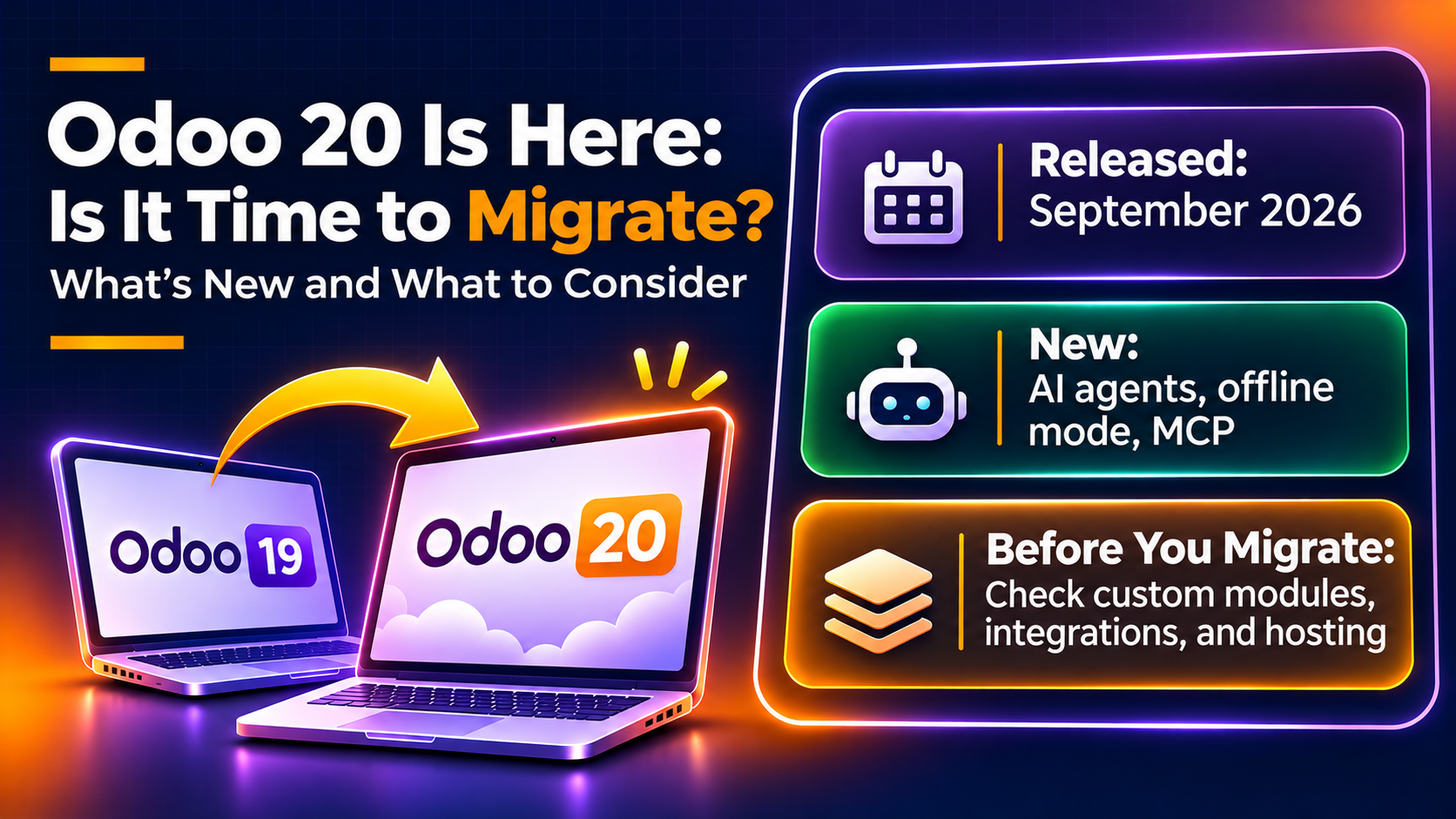
Odoo 20 shipped in September 2026, which makes it, as of this writing, a very recent release — only a couple of months old. That timing alone is the most important fact in deciding whether to migrate now: this is the point in any major software release's life where the real trade-offs between “get the newest capability now” and “let someone else find the early problems first” are sharpest.
A note on honesty before going further: a genuinely useful version of this post would cite specific, verified bugs reported against Odoo 20. A search for exactly that turned up nothing reliably citable this early after release — no credible, specific bug list worth repeating here. Rather than inventing specifics to sound more authoritative, this post makes the general case for how to think about early-release risk, and tells you where to check for real, current information yourself.
Why New Major Releases Carry More Risk, as a General Pattern
- ✓This isn't specific to Odoo — it's true of nearly all major software releases, and it's worth understanding the mechanism rather than just the conclusion:
- ✓Smaller real-world testing surface. A release that's been live for a year has been run by thousands of businesses across every conceivable configuration, data pattern, and edge case. A release that's two months old simply hasn't accumulated that breadth of real usage yet, regardless of how thoroughly it was tested pre-release.
- ✓Third-party and localization modules lag the core release. Country-specific tax and compliance modules, and marketplace apps built by independent developers, typically need time to update for a new major version after it ships. Some are ready at launch; many take weeks or months.
- ✓Early patch releases exist for a reason. The pattern of a .0 release followed by several patch releases in its first months isn't a sign something went wrong — it's the normal, healthy process of real-world usage surfacing issues that pre-release testing didn't catch, and getting them fixed quickly.
Where to Actually Check Current, Real Information
Rather than relying on secondhand claims (including this post, for anything beyond the general pattern above), the most reliable places to check Odoo 20's actual current state are:
This is genuinely more reliable than any blog post's summary, including this one, because it reflects the current, real state of the release rather than a snapshot that ages the moment it's published.
A Practical Framework for Deciding
Rather than a single yes-or-no answer, the right call depends on your specific situation — how much legacy complexity you're carrying, how critical uninterrupted uptime is, and how much early-release friction your team can absorb. The table below maps common situations to a reasonable starting lean, not a fixed rule.
The Honest Bottom Line
There's no universally correct answer to “is it the right time” — it depends on how much risk your specific business can absorb, and how much you value having the newest capability immediately versus a more thoroughly tested landing spot. What's genuinely true, and worth repeating, is that two months post-release is early enough that caution is reasonable, not paranoid, and that the right next step for anyone seriously considering it is checking Odoo's own current release notes and issue tracker directly — not relying on any one article's snapshot of a situation that's still actively evolving.
Ready to Try It?
Not sure if Odoo 20 is ready for your business yet? Book a Free Demo at hirebeans.cloud and we'll give you a straight answer.
Book a Free Demo