
Introduction
If your Odoo project is behind schedule, over budget, or has a go-live date that's already been pushed back more than once, the first instinct is often to panic and the second is to blame the platform. Neither is useful. What actually matters at this stage is an honest, structured diagnosis — because “stuck” isn't one problem. It's usually a mix of four, and the mix determines which path forward actually makes sense.
The Four Causes of a Stalled Implementation
- ✓Most troubled Odoo projects trace back to some combination of:
- ✓The technical build. Configuration doesn't match real workflows, data migration is incomplete or dirty, integrations don't work, custom modules conflict with each other.
- ✓Timeline and budget. Go-live dates keep moving, hours are burning faster than scope is shrinking, nobody can say with confidence when this ends.
- ✓People and adoption. The system technically works, but your team doesn't trust it, doesn't use it consistently, or has quietly gone back to spreadsheets for the parts that feel unreliable.
- ✓Process and governance. No one person owns the project, change requests aren't tracked, there's no agreed definition of what “done” looks like.
- ✓A project that's merely behind schedule because of one of these (timeline, say) is in a very different position than a project with build issues, adoption issues, and governance issues stacked together. The first is normal project friction. The second is actively failing.
Step One: Audit Before You Spend Another Rupee
Before deciding anything, get an honest read on what was actually built — not what the status reports said was built. This means someone independent reviewing the configuration, the custom code, the data state, and the governance history: how many go-live dates were missed, whether there's a documented success criteria, whether the person who scoped the project is still involved.
This audit matters regardless of which path you end up choosing, because “rescue,” “restart,” and “switch partners” all require knowing exactly what's salvageable before you commit budget to any of them.
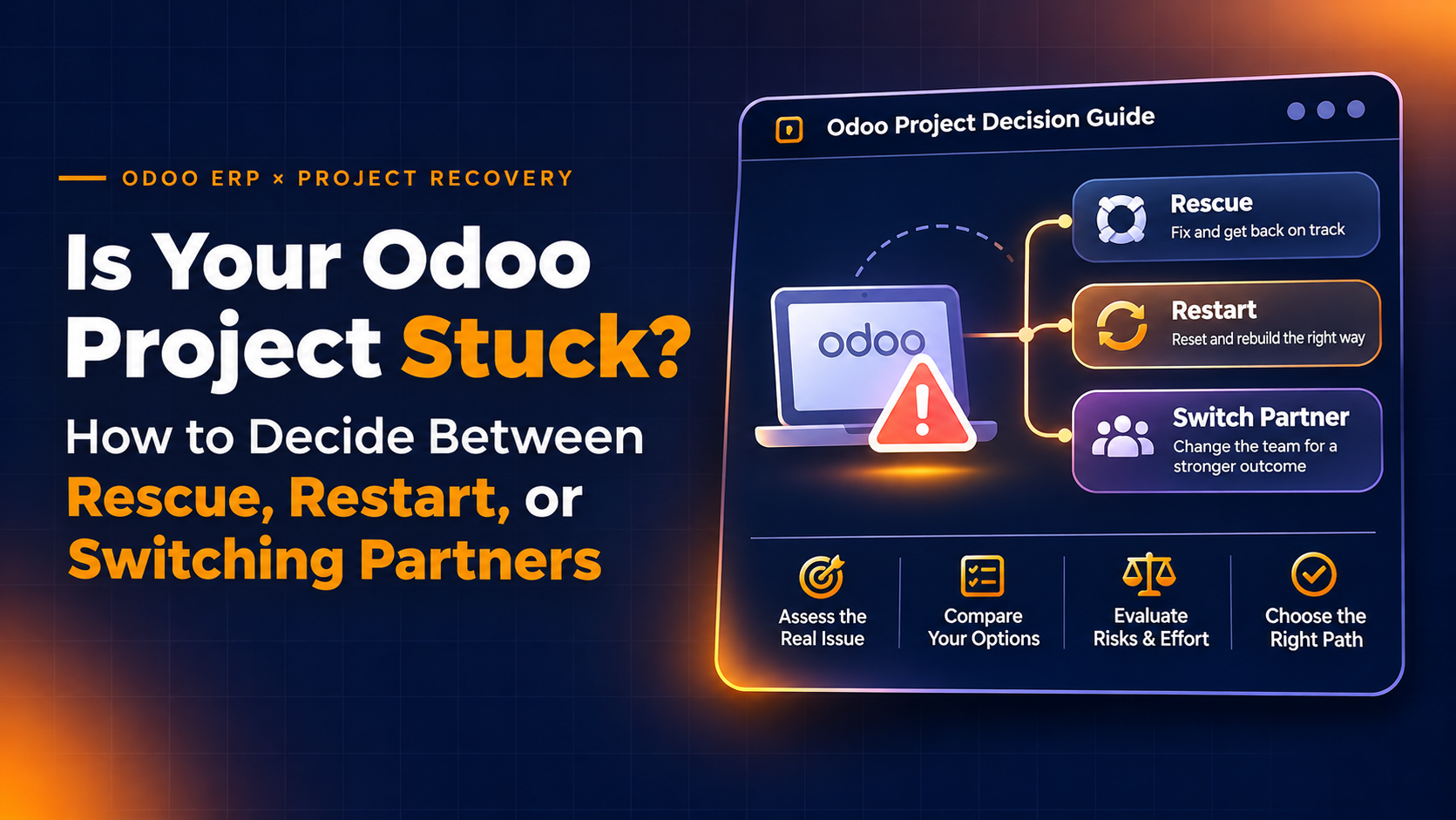
Option 1: Rescue — Stabilize, Then Improve
Rescue makes sense when the core build is largely sound but specific subsystems are broken, unfinished, or misconfigured. The right sequence here matters: stabilize first, improve second. A failed implementation has usually already spent the organization's patience, so the temptation to fix everything in one big release is the wrong instinct — the next visible failure after a “we fixed it” announcement is often politically fatal to the project, even if it's unrelated to the original issues.
A good rescue separates what's broken from what's merely unloved — a dead automation silently failing in the background is a different problem, with a different fix and different effort, than a workflow that was never configured to match how your team actually operates. Conflating the two is one of the most common rescue mistakes.
Option 2: Restart — When Retrofit Costs More Than Rebuild
Sometimes the audit reveals that scope was invented rather than discovered from day one — a generic Odoo install dressed up as a tailored one, with customization layered on top to paper over a mismatch that was there from the start. In these cases, retrofitting can cost more than rebuilding core modules from a proper discovery phase. This is a harder call to make, because it means acknowledging sunk cost, but it's usually cheaper in the long run than years of working around a foundation that was never right.
Option 3: Switch Partners — Without Switching the Software
This is the most common misdiagnosis in a stuck project: assuming the platform failed when the actual issue is the team running it. Signs it's time to change partners rather than the software itself: deadlines consistently missed with no revised plan or explanation, no dedicated project owner or accountability structure, a pattern of saying yes to every customization request instead of pushing back, and communication that's slowed to a crawl. If these sound familiar, the fix is usually a new implementation team working from an honest audit of the existing build — not a new ERP.
What to Look for in Whoever Takes Over
Whichever path fits, the next partner should insist on the audit before touching anything, be willing to tell you what's salvageable versus what needs rebuilding (even if that's not what you want to hear), and assign one accountable point of contact from day one — the single most common gap in projects that got stuck in the first place.
A stalled Odoo project is recoverable in most cases. The businesses that recover well are the ones that diagnose honestly before they act, rather than defaulting to the most dramatic option out of frustration.
Ready to Try It?
Is your Odoo project stuck? Book a Free Demo at hirebeans.cloud and ask about our Odoo Project Rescue service.
Book a Free Demo