
The Reality of Complex Commerce
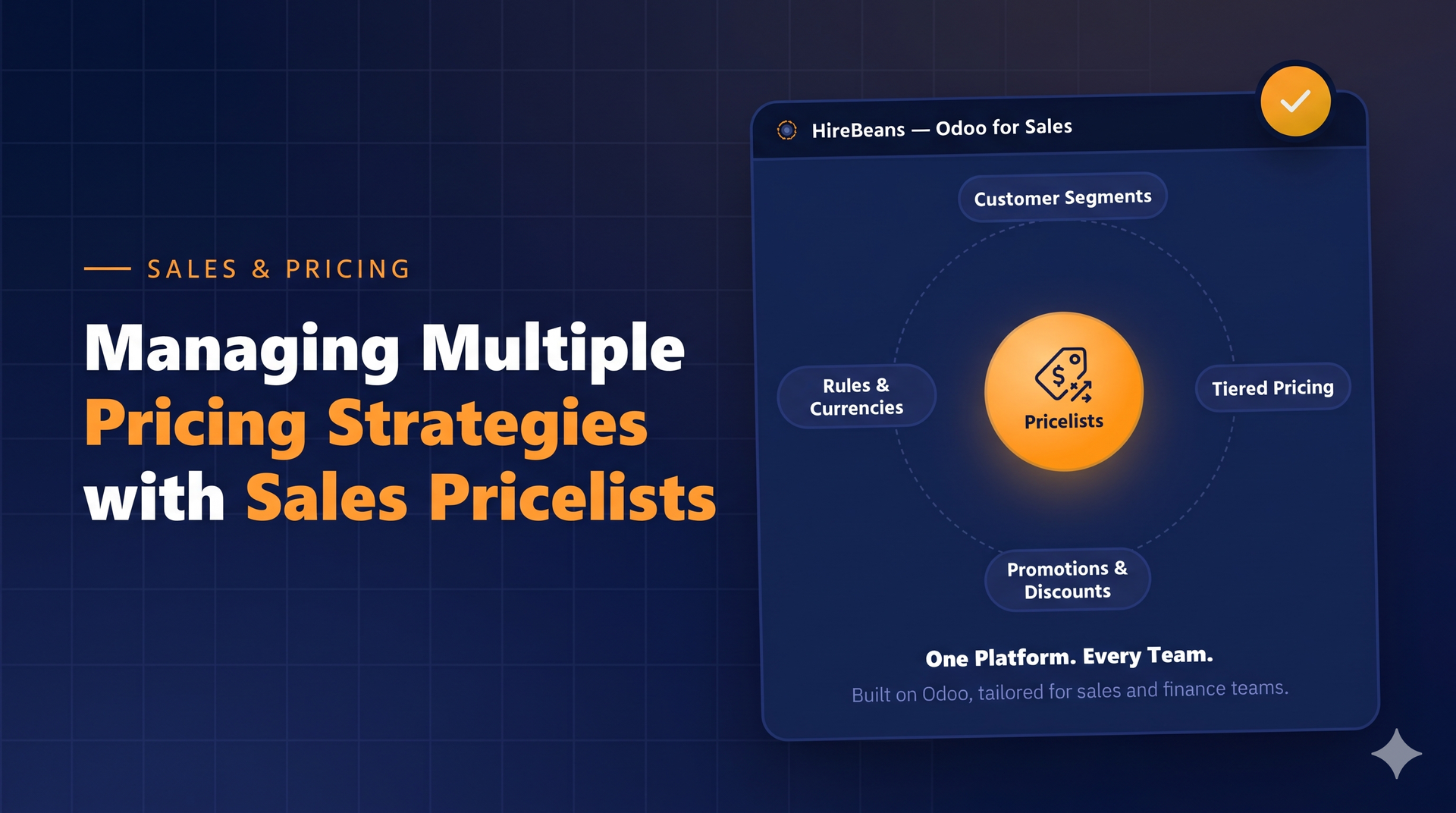
In modern commerce, a 'one-size-fits-all' pricing strategy rarely maximizes revenue. Businesses frequently require vastly different prices for different customer segments, distinct sales channels, varying order quantities, or specific regional markets. Customer-specific pricing is a powerful tool for building loyalty and securing long-term commercial agreements, but it requires sophisticated oversight to manage correctly.
The Chaos of Manual Price Management
When sales representatives are forced to maintain complex pricing hierarchies manually or refer to outdated PDF matrices, mistakes are inevitable. This leads to inconsistent quotations where clients might inadvertently receive the wrong rates, or reps might apply incorrect, unprofitable discounts. Furthermore, without pricing management software, enforcing corporate pricing policies and updating seasonal rates across the entire sales team is nearly impossible.
Key Features: Automating Price Complexity
A Practical Business Example
A commercial coffee roaster sells to three distinct channels: standard retail customers via a website, local cafes that buy at wholesale pricing, and a massive corporate client with a deeply negotiated two-year contract. Using structured sales pricelists, the management team establishes strict rules in the ERP. When a sales rep drafts an order for the corporate client, the system instantly overrides the standard price with the contracted rate. This guarantees consistency and completely eliminates the risk of human error costing the company its margin.
Conclusion
Sales price automation removes the guesswork from quoting and ordering. However, to truly benefit, management must regularly review discount policies, maintain accurate product costs, and ensure pricelist priorities are configured correctly.
Take control of your complex pricing strategies. Book a Free Demo at hirebeans.cloud
Book a Free Demo