
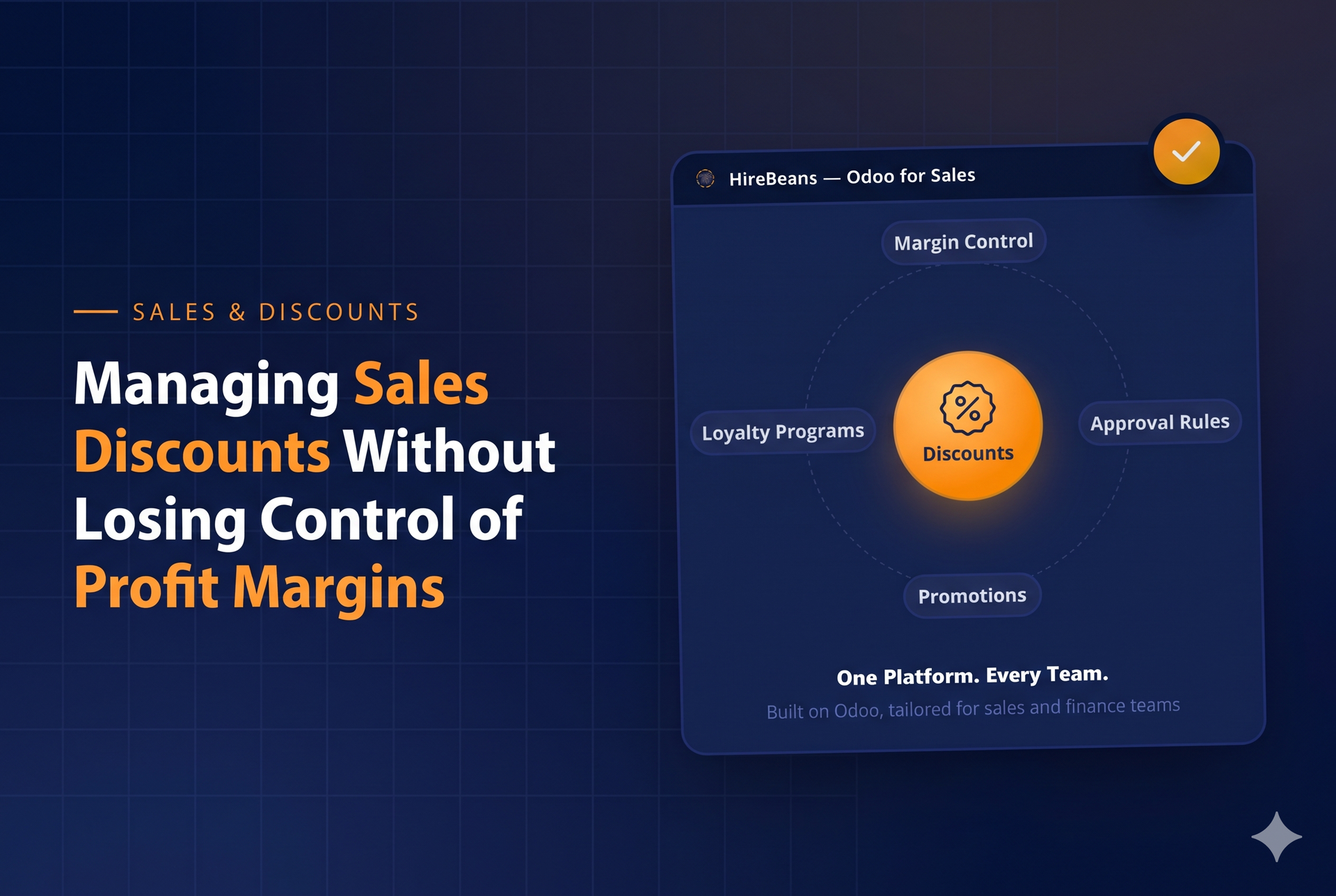
The Double-Edged Sword of Discounting
Discounts are a universally understood language in sales. Businesses heavily utilize promotional pricing, volume-based offers, and negotiated commercial terms to aggressively attract new customers, move stagnant inventory, and close highly competitive deals. However, discounting is a double-edged sword; while it can drive top-line revenue, unchecked price reductions can devastate a company's bottom-line profitability.
The Threat of the Rogue Sales Rep
Managing discounts without firmly established rules and digital guardrails is incredibly risky. If sales reps have unlimited authority to alter prices to win commissions, the business suffers from inconsistent pricing across the market and excessive discounting. Furthermore, without real-time cost visibility, a rep might easily offer a discount that drops the sale price below the actual cost of goods sold, meaning the company actively loses money on the transaction.
Key Features: Enforcing Margin Control
A Practical Business Example
A wholesale distributor sells industrial generators. A hungry sales rep wants to close a deal with a massive new client and attempts to apply a 25% discount to the order. However, the company's pricing strategy and discount approval workflow dictate that any discount over 15% requires executive sign-off. The system blocks the quote and routes it to the Sales Director. The Director reviews the real-time margin calculation, realizes a 25% discount would erase all profit, and counters with an approved 18% discount, saving the margin while still offering a competitive deal.
Conclusion
Discounts should be strategic investments, not desperate concessions. By leveraging ERP systems to enforce discount policies and review profitability in real time, businesses can empower their sales teams to negotiate effectively without ever sacrificing the financial health of the organization.
Stop guessing your margins. Gain total pricing control with a Free Demo at hirebeans.cloud
Book a Free Demo