
Introduction
After goods are received, where they are stored has a large effect on how quickly they can be found and picked later. A putaway strategy is the set of rules that decides where incoming items go. If those rules live only in the heads of experienced staff, the warehouse becomes dependent on them.
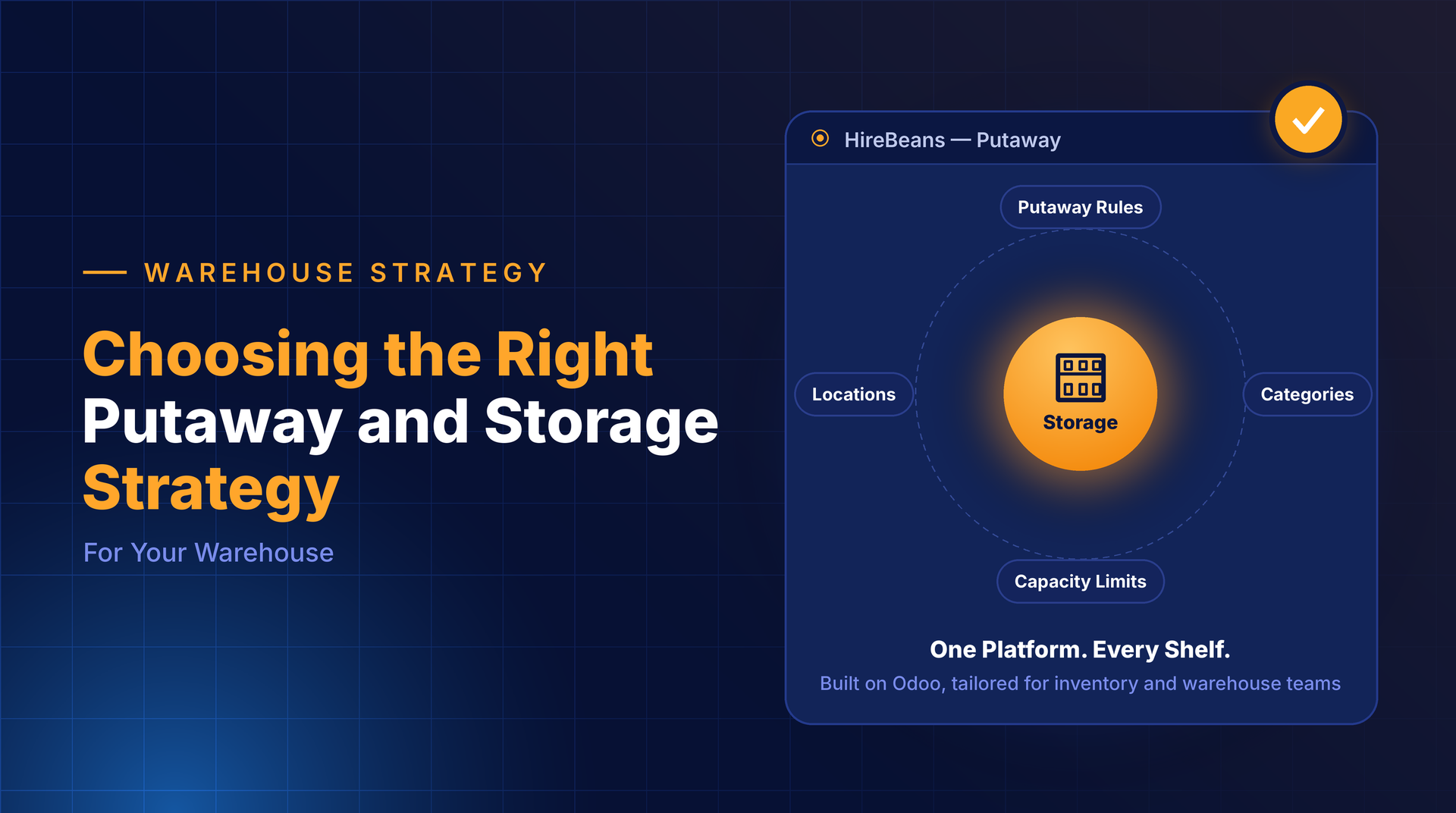
This guide explains how to think about putaway and storage, and how Odoo Inventory lets you put those decisions into the system so every receipt is stored consistently.
The Challenge
In an unstructured warehouse, goods go wherever there is space. This feels flexible at first, but problems build up. Pickers spend time searching for products, fast-moving items are stored far from the dispatch area, heavy items end up on high shelves, and the same product sits in several places with no clear record.
New employees make this worse because they do not know the informal rules. Mistakes in storage turn into mistakes in picking, and congestion builds around the receiving area as goods wait for someone to decide where they belong.
Key Features
A Real-World Example
- ✓Consider a company selling home appliances, with small accessories, medium boxes, and large items such as washing machines. Initially, everything is stored wherever space is free. Pickers walk long distances and large units block aisles.
- ✓The company redesigns its layout. Large items are stored in ground-level bulk locations near the dispatch dock. Small accessories go in shelving near the packing area. Fast-moving products are placed in the most accessible locations. In the system, the team creates matching locations and putaway rules by product category. When a receipt is validated, the system suggests the right location for each product.
- ✓They also use storage categories to limit what each shelf can hold, so that a small shelf is not assigned more than it can carry. For items that need inspection, the receipt goes first to a quality area and then to storage.
- ✓A putaway strategy should be reviewed after a few weeks of use. Real picking patterns often differ from the plan, and seasonal products may need to move closer to the dock during peak periods. Rules only help if they are kept up to date.
Conclusion
A good putaway strategy balances three things: the space you have, how quickly items need to be picked, and the effort required to store them. There is no single correct design. It depends on your products, order patterns, and warehouse layout.
Start by classifying products by size, speed, and handling needs, then build locations and rules that match. Review the results regularly and adjust, because the best layout is the one that reflects how your warehouse actually works.
Turn storage decisions into clear rules so every item has a place and every picker knows where to find it. Book a Free Demo at hirebeans.cloud
Book a Free Demo