
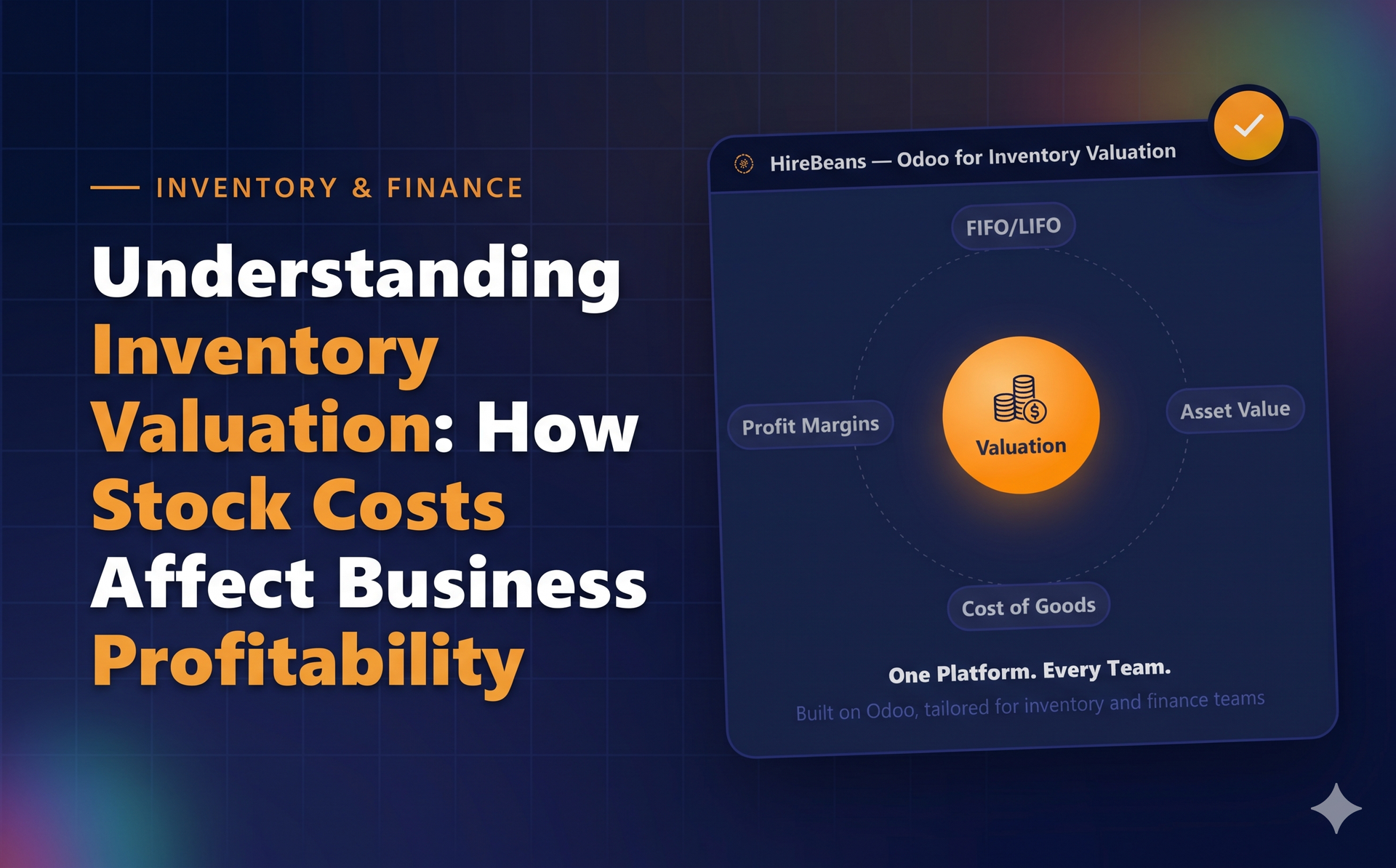
What is Inventory Valuation?
Inventory valuation is the accounting practice of assigning a financial value to the unsold goods currently held by your business at the end of an accounting period. It is an absolutely critical metric because it directly impacts your Cost of Goods Sold (COGS), your reported gross profit, and the asset value listed on your balance sheet. Understanding this value is essential for making informed financial decisions and accurate tax reporting.
Navigating Common Costing Methods
Businesses must choose a specific method to determine how costs are applied to inventory as prices fluctuate. The First In, First Out (FIFO) method assumes that the oldest products purchased are the first ones sold, matching current sales revenues with older inventory costs. Alternatively, the Average Cost (AVCO) method blends the cost of all available units, creating a smoothed-out valuation that minimizes the impact of sudden price spikes from suppliers.
Key Features: Aligning Stock with Financials
A Practical Business Example
Imagine a distributor purchasing steel pipes. In January, they buy 100 pipes at $10 each. In March, due to inflation, they buy 100 more at $15 each. If they sell 50 pipes in April, the inventory valuation method dictates their COGS. Under FIFO costing, the COGS is $500 (50 pipes x $10). Under the average cost method, the cost of all pipes averages to $12.50, making the COGS $625. This choice significantly alters the reported gross margin for the quarter, highlighting why inventory accounting is vital.
Conclusion
Inventory quantities and inventory value are two distinct measurements that must be perfectly synchronized. By leveraging integrated ERP software, companies can maintain pristine physical stock records while ensuring their accounting valuation accurately reflects their true financial health.
Want better visibility into your inventory costs? Book a Free Demo at hirebeans.cloud
Book a Free Demo