
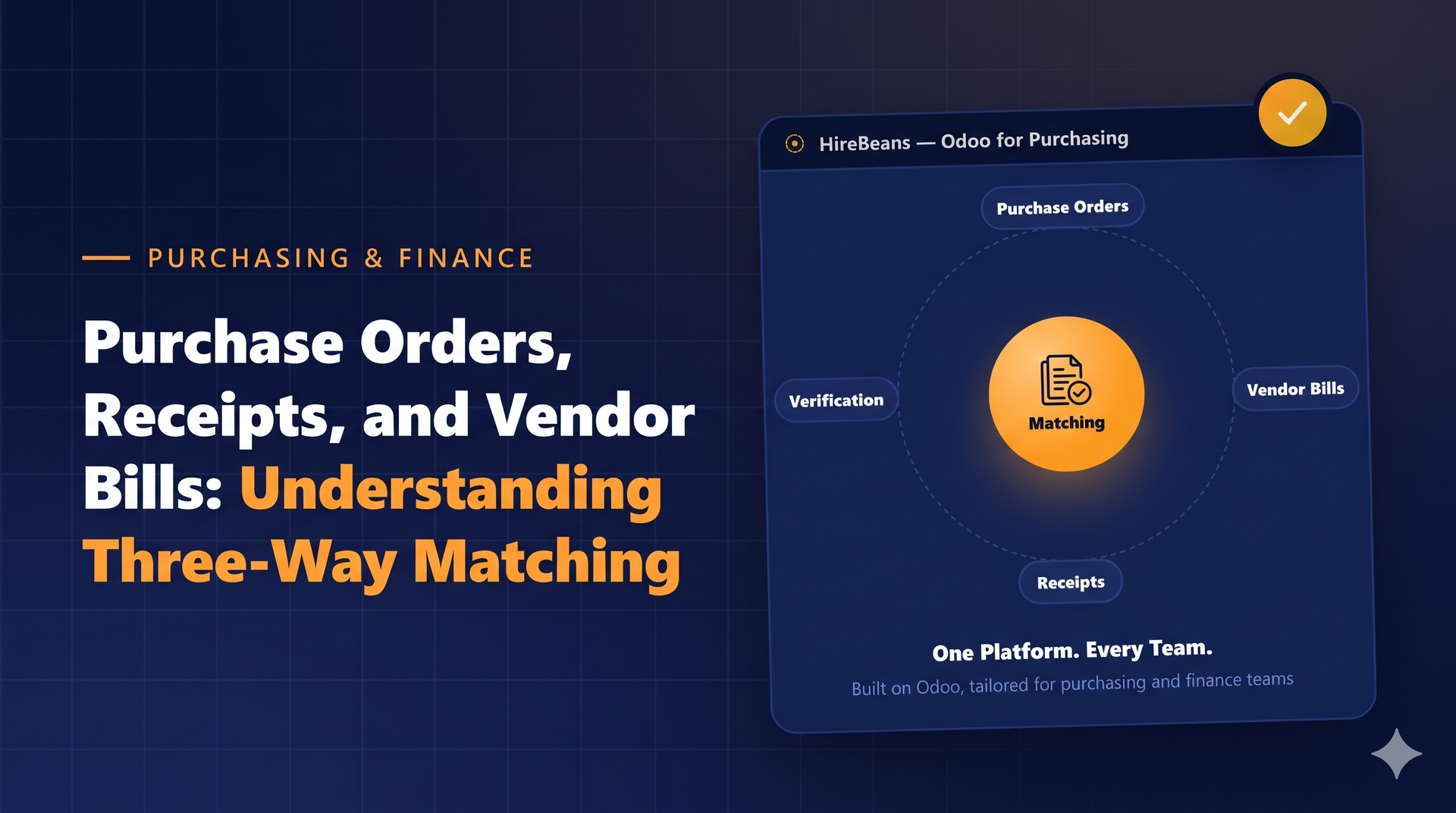
The Ultimate Financial Safeguard
In business, ensuring you only pay for what you actually ordered and received is fundamental to financial health. Three-way matching is an essential procurement and accounts payable control designed to do exactly that. Before a vendor's invoice is approved for payment, the finance team must systematically verify that three critical documents perfectly align: the original Purchase Order (what was requested), the Receiving Report (what physically arrived), and the Vendor Bill (what is being charged).
The Danger of Blind Payments
Processing supplier invoices without a rigorous verification process exposes a business to severe financial leakage. Common risks include paying for incorrect quantities, failing to catch sudden pricing discrepancies, processing duplicate charges, and, worst of all, paying for goods that never actually arrived at the warehouse. Relying on paper trails or disjointed systems makes verifying these details incredibly time-consuming and highly prone to human error.
Key Features: Automating the Match in Odoo
A Practical Business Example
A construction company orders 100 safety helmets from a supplier at $20 each. A week later, the warehouse receives only 90 helmets, logging the shortage into the ERP system. Shortly after, the supplier sends an invoice demanding payment for all 100 helmets. Because the business utilizes three-way matching software, the accounts payable clerk is immediately warned of the discrepancy. The clerk blocks the payment, contacts the supplier, and requests a revised invoice for 90 helmets, saving the company from overpaying.
Conclusion
Three-way matching fosters unparalleled coordination between procurement, the warehouse, and the finance team. While it requires strict operational discipline to log receipts accurately, this procurement compliance control is the absolute best defense against billing errors and financial fraud.
Stop overpaying for missing inventory. Book a Free Demo at hirebeans.cloud
Book a Free Demo